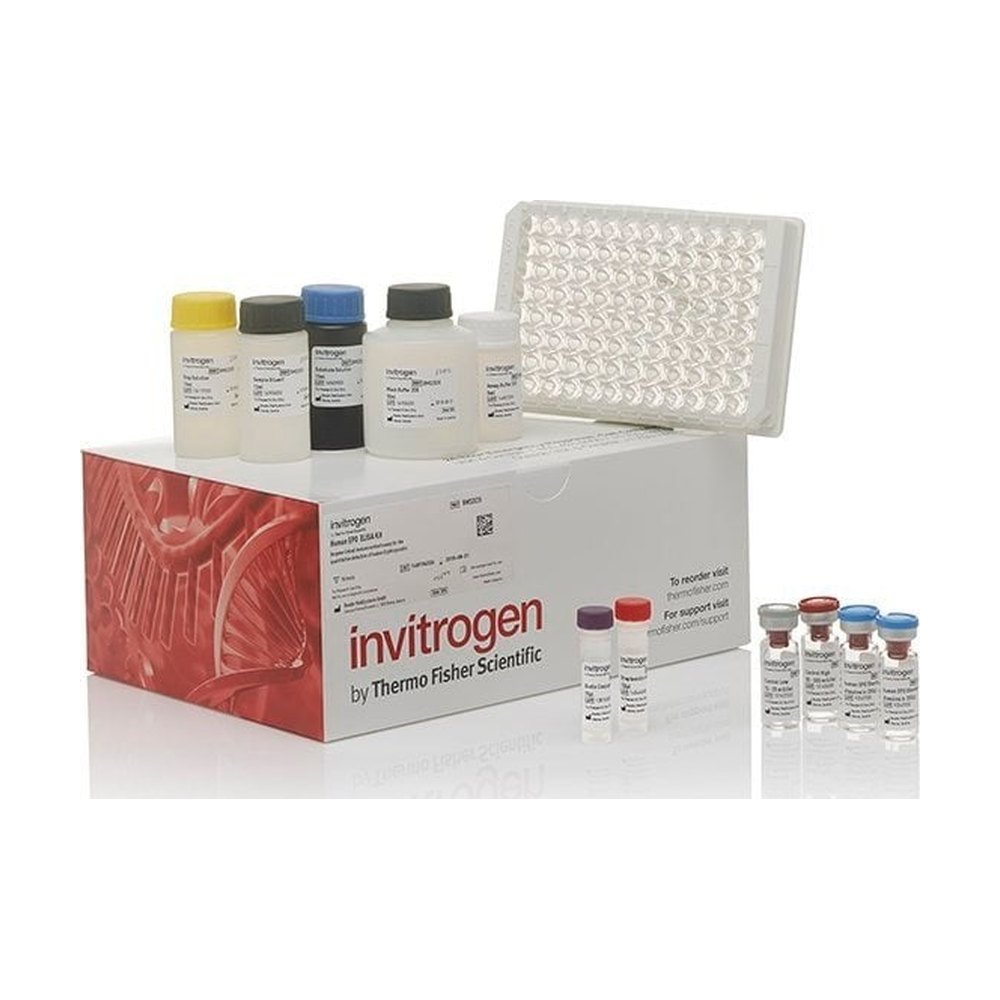
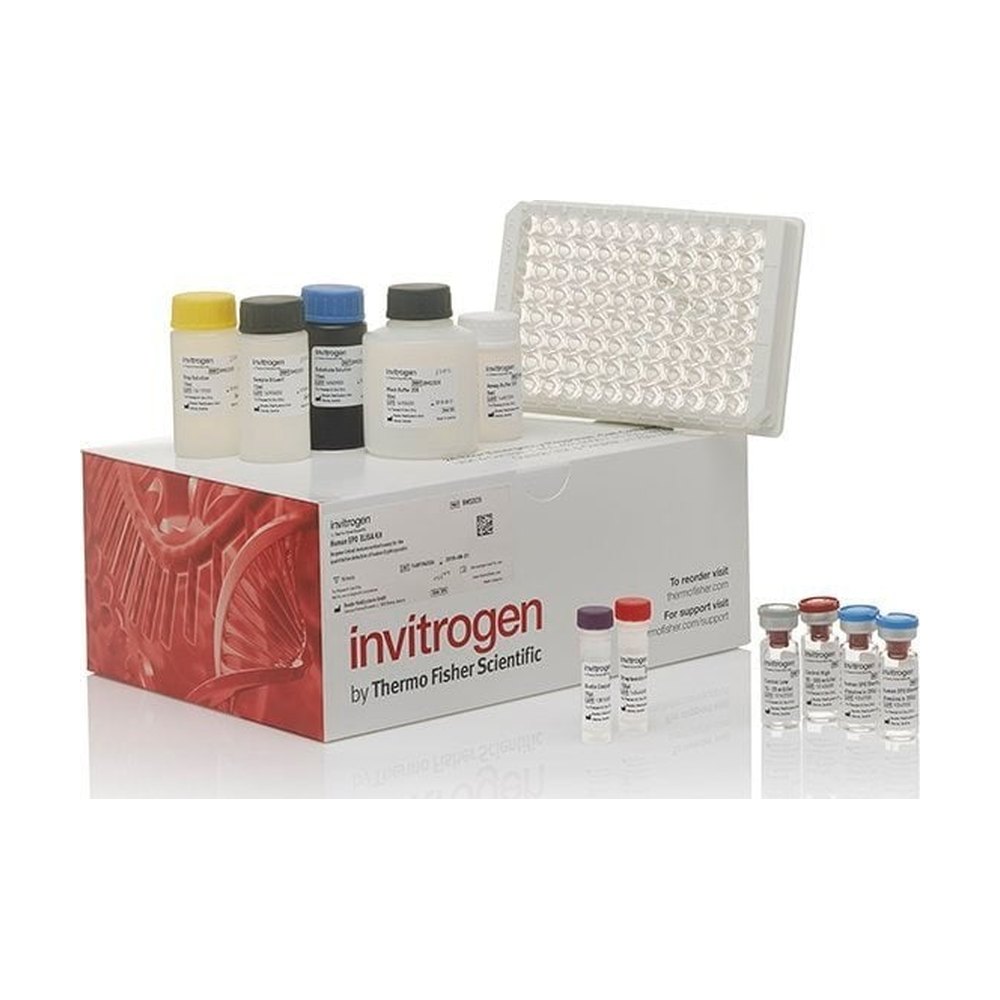
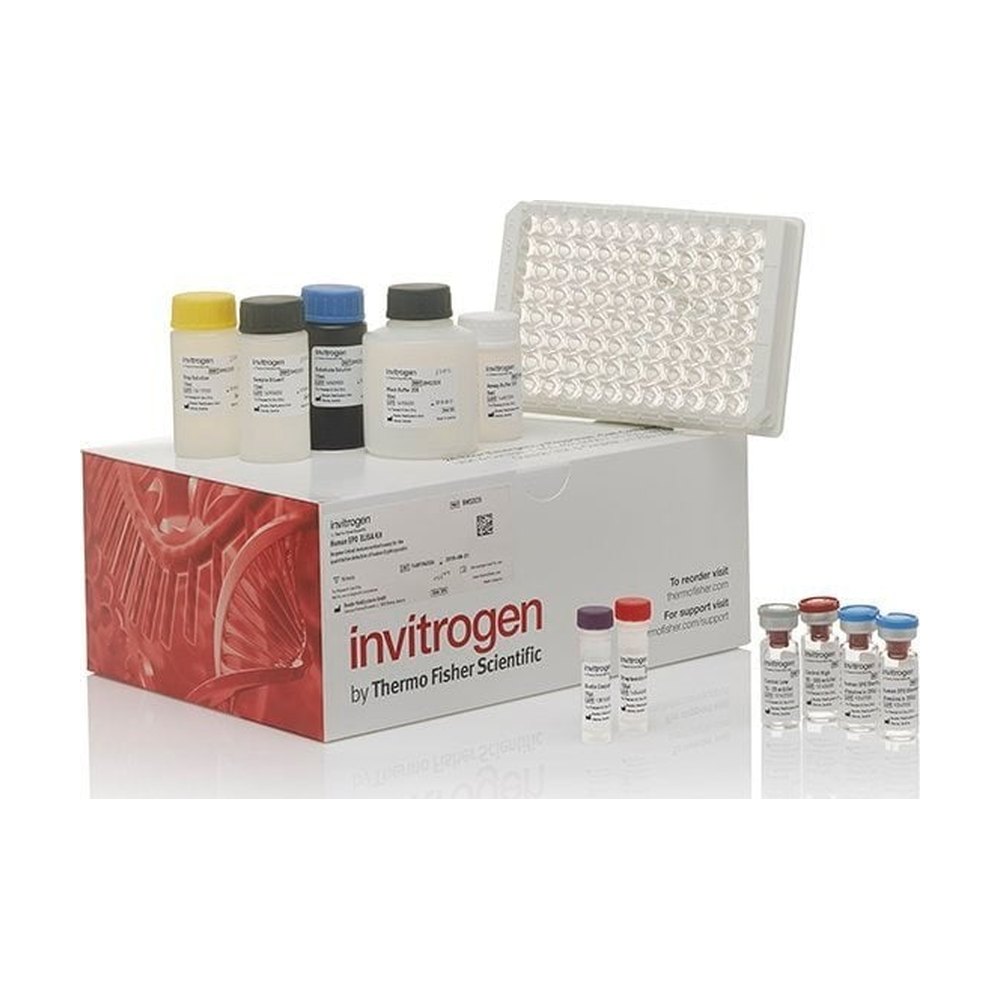
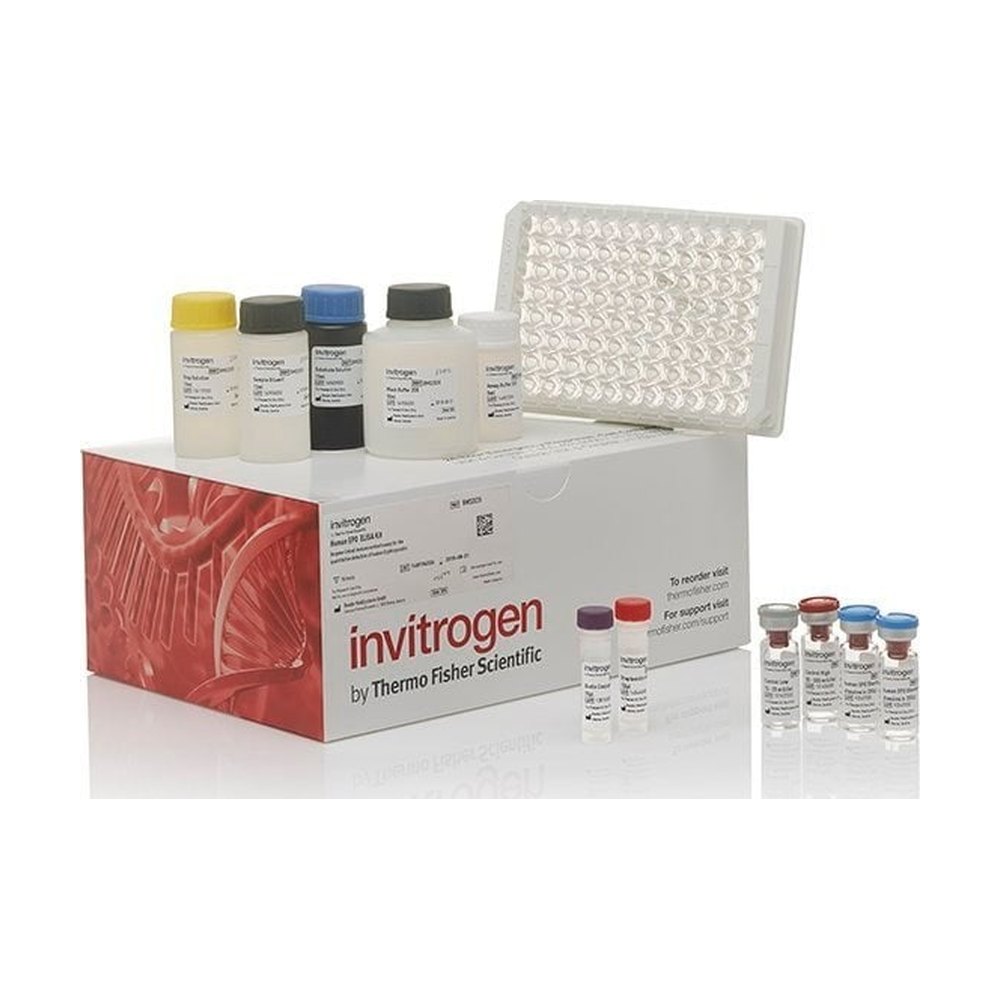
Kit ELISA sandwich Insulin-like Growth Factor 2 (Ms IGF-2) (mouse): quantitative assay of Ms IGF-2 in the cell culture medium. The test recognizes only the natural and recombinant forms of Ms IGF-2.
Accession number
P09535
Dose range
2.3-150 ng/ml
Sensitivity of the dosage
1500 pg/ml
Calibration range
1500 pg/ml to 150 ng/ml
Dose
ELISA solid-phase sandwich
Brand
Invitrogen
Kit ELISA sandwich Insulin-like Growth Factor 2 (Ms IGF-2) (mouse): quantitative assay of Ms IGF-2 in the cell culture medium. The test recognizes only the natural and recombinant forms of Ms IGF-2.
Kit ELISA sandwich Insulin-like Growth Factor 2 (Ms IGF-2) (mouse): quantitative assay of Ms IGF-2 in the cell culture medium. The test recognizes only the natural and recombinant forms of Ms IGF-2.
Method principle: This ELISA solid phase sandwich test (immuno-enzymatic dose) measures the amount of target bound between a pair of matched antibodies. A specific target antibody is pre-adsorbed into the wells of the supplied microplate. Samples, standards or controls are added to these wells and bind to immobilized antibodies (capture antibodies). The sandwich is formed by adding the second antibody (detection antibody), then a substrate solution reacts with the enzyme-antibodies-target complex to produce a measurable signal. The intensity of this signal is directly proportional to the concentration of the target present in the original sample.
Rigorous validation: Each batch manufactured from this ELISA kit is checked for criteria such as sensitivity, specificity, accuracy and reproducibility from one batch to another (see the package leaflet for more information on validation).
The insulin gene family, consisting of insulin, relaxin and insulin-like growth factors I and II (IGF-I and IGF-II), represents a group of structurally related polypeptides whose biological functions have diverged. IGF, also known as somatomedines, is a class of polypeptides that play a key role in the growth of pre-adolescent mammals. IGF-I and IGF-II are critical regulators of cell proliferation and differentiation. Most of the growth-promoting properties of both ligands are induced by the IGF-I receptor (IGF-IR). IGF-I and IGF-II, respectively called somatomedin C and somatomedin A, are single-chain polypeptides that share an amino acid sequence homology of approximately 47% with insulin. IGF-I expression is regulated by growth hormone and induces postnatal growth, while IGF-II is induced by placental lactogen during prenatal development. L-IGF-II is a factor of foetal growth influenced by placental lactogen and expressed abundantly by placental trophoblasts. Variations in IGF-II and IGF1 (IGFBP1) binding protein genes are associated with metabolic changes induced by over-feeding. The human IGF-II gene covers chromosome 11p15.5, coding a protein of 180 amino acids precursor to IGF-II.