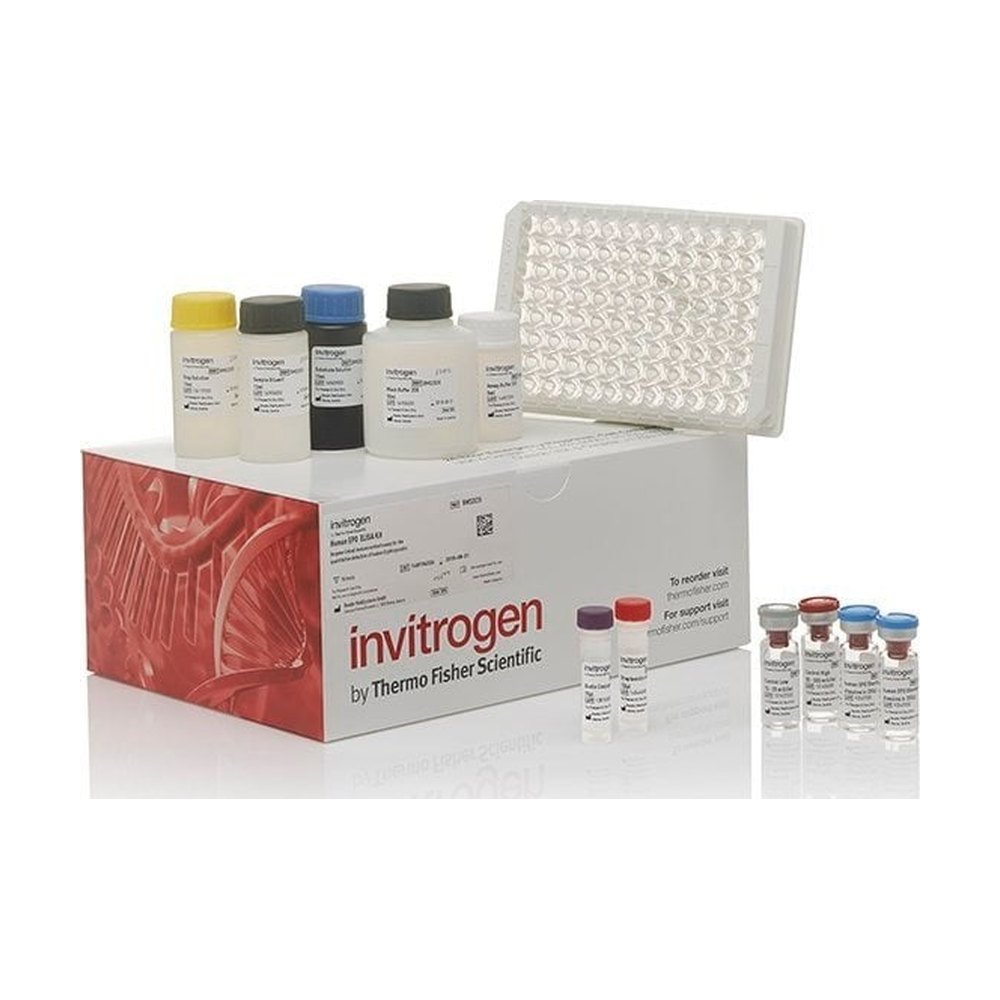
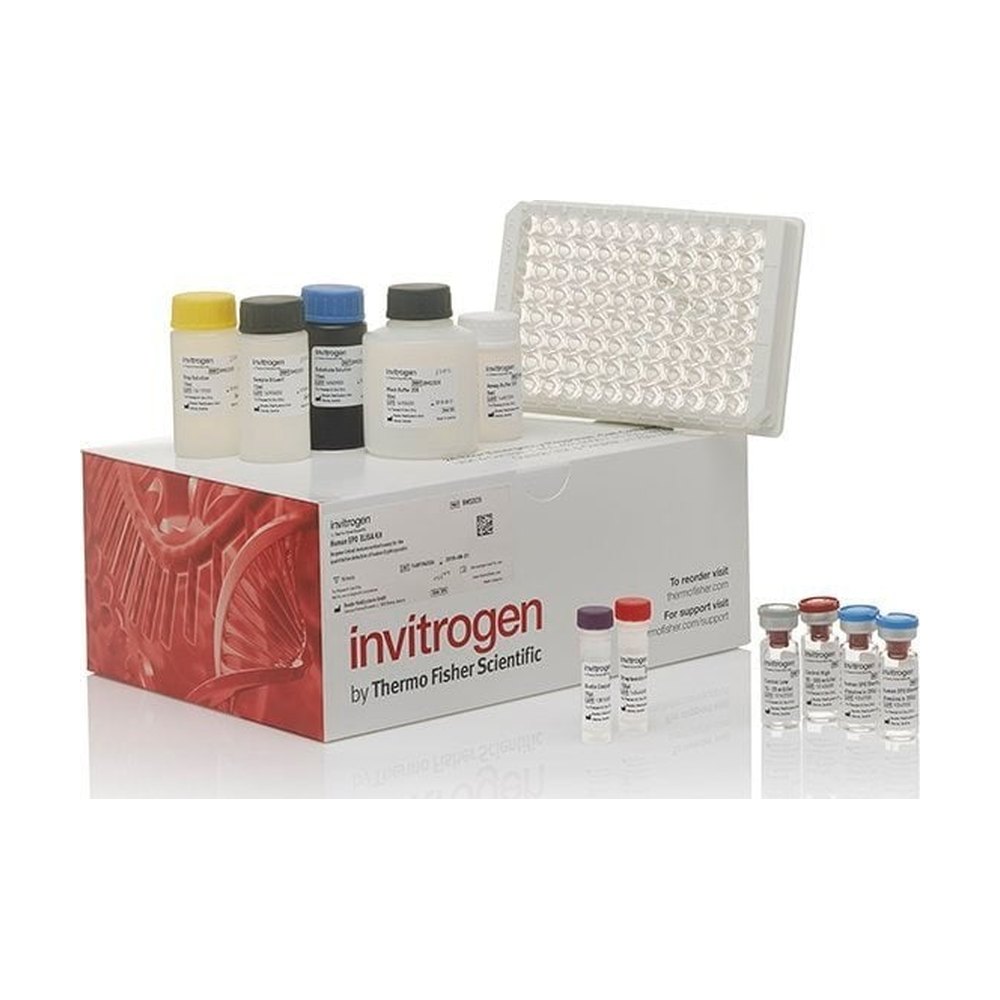
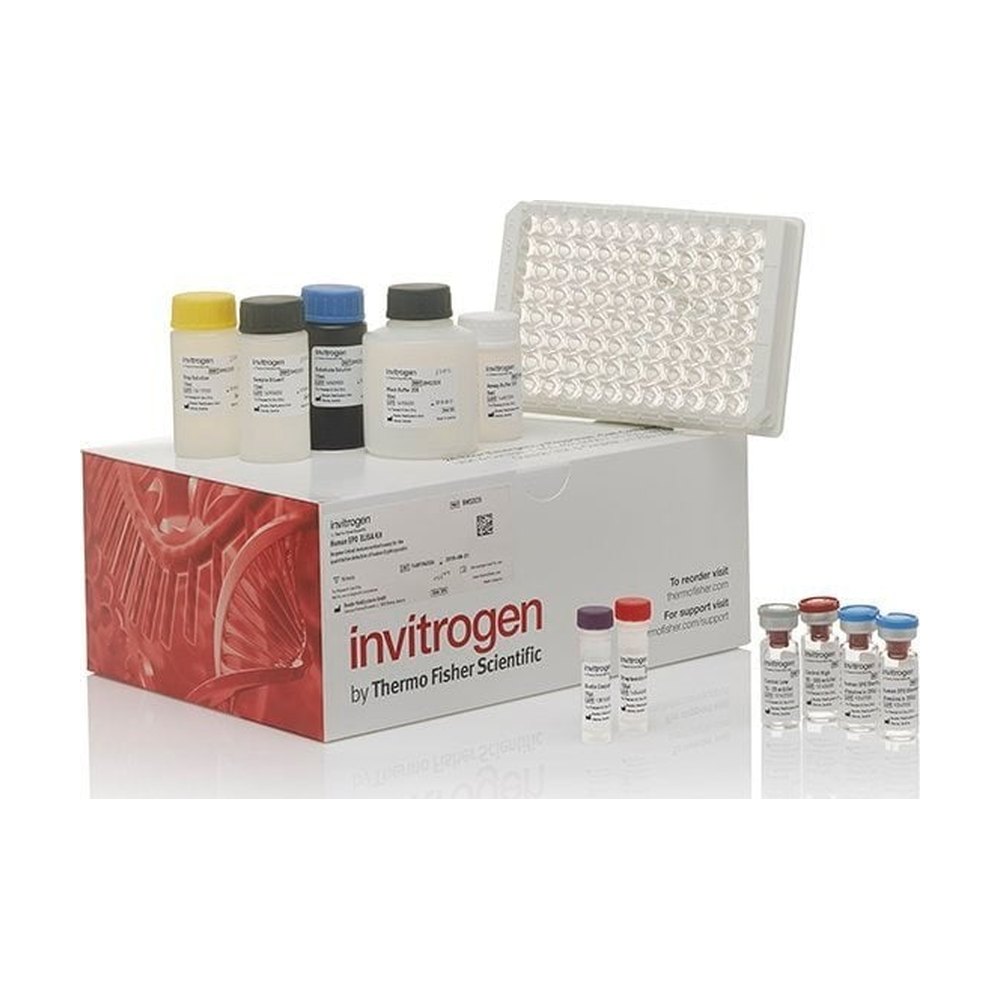
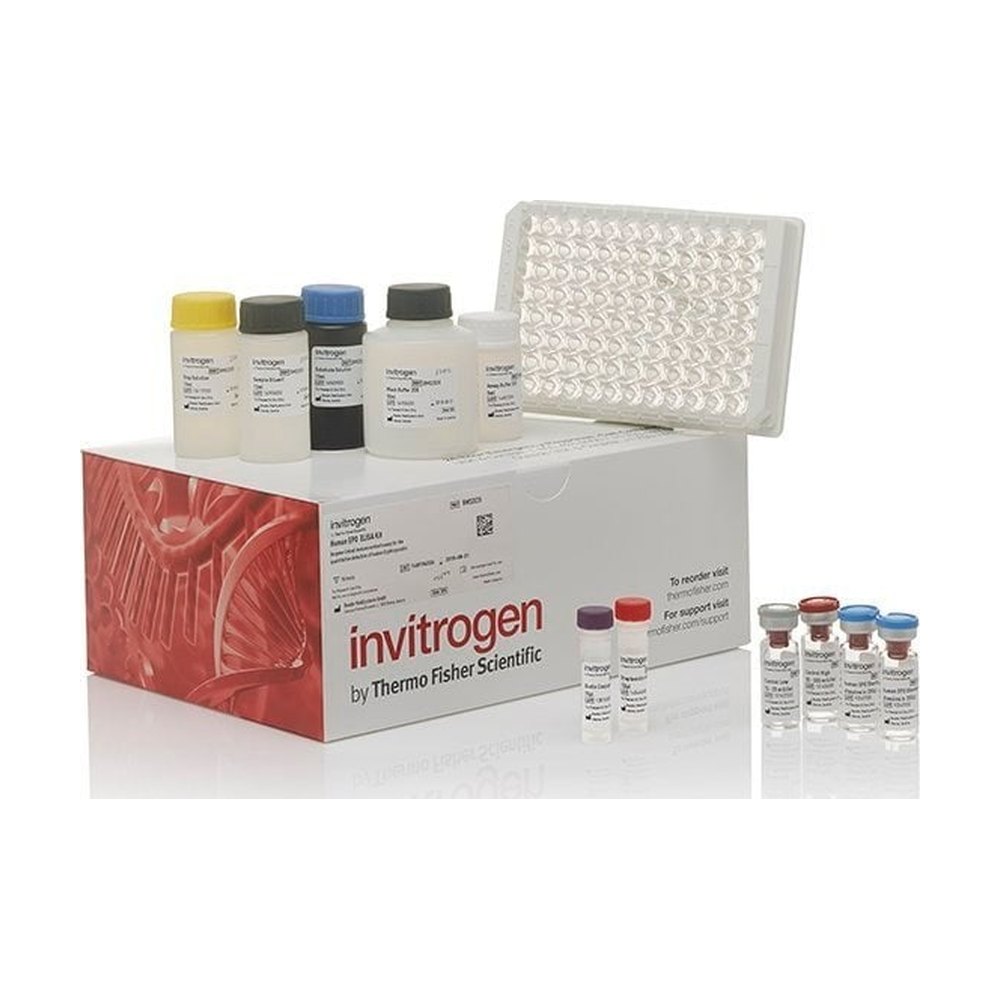
Kit ELISA NPPB/BNP sandwich (human): quantitative determination of Hu NPPB in serum, plasma or cell culture medium. The test exclusively recognizes the natural and recombinant forms of Hu NPPB.
Accession number
P16860
Dose range
15.63-1000 pg/ml
Sensitivity of the dosage
14 pg/ml
Calibration range
14 pg/ml to 1000 pg/ml
Dose
ELISA solid-phase sandwich
Brand
Invitrogen
Kit ELISA NPPB/BNP sandwich (human): quantitative determination of Hu NPPB in serum, plasma or cell culture medium. The test exclusively recognizes the natural and recombinant forms of Hu NPPB.
Kit ELISA NPPB/BNP sandwich (human): quantitative determination of Hu NPPB in serum, plasma or cell culture medium. The test exclusively recognizes the natural and recombinant forms of Hu NPPB.
Method principle: This ELISA solid phase sandwich test (immuno-enzymatic dose) measures the amount of target bound between a pair of matched antibodies. A specific target antibody is pre-adsorbed into the wells of the supplied microplate. Samples, standards or controls are added to these wells and bind to immobilized antibodies (capture antibodies). The sandwich is formed by adding the second antibody (detection antibody), then a substrate solution reacts with the enzyme-antibodies-target complex to produce a measurable signal. The intensity of this signal is directly proportional to the concentration of the target present in the original sample.
Rigorous validation: Each batch manufactured from this ELISA kit is checked for criteria such as sensitivity, specificity, accuracy and reproducibility from one batch to another (see the package leaflet for more information on validation).
In cardiac tissue, brain natriuretic peptide (BNP) is synthesized as a precursor of 134 amino acids (prepro-BNP), which is cleaved by proteases to form a 26 aa signal peptide and a 108 aa pro-BNP. Proteolytic digestion of pro-BNP results in the formation of an NT-proBNP amino-terminal at 76 aa and a molecule of BNP hormone at 32 aa biologically active. ProBNP and NTproBNP circulate in human plasma and have been proposed as markers for early diagnosis of left ventricular dysfunction and as prognostic markers of possible cardiac complications in patients with heart failure.