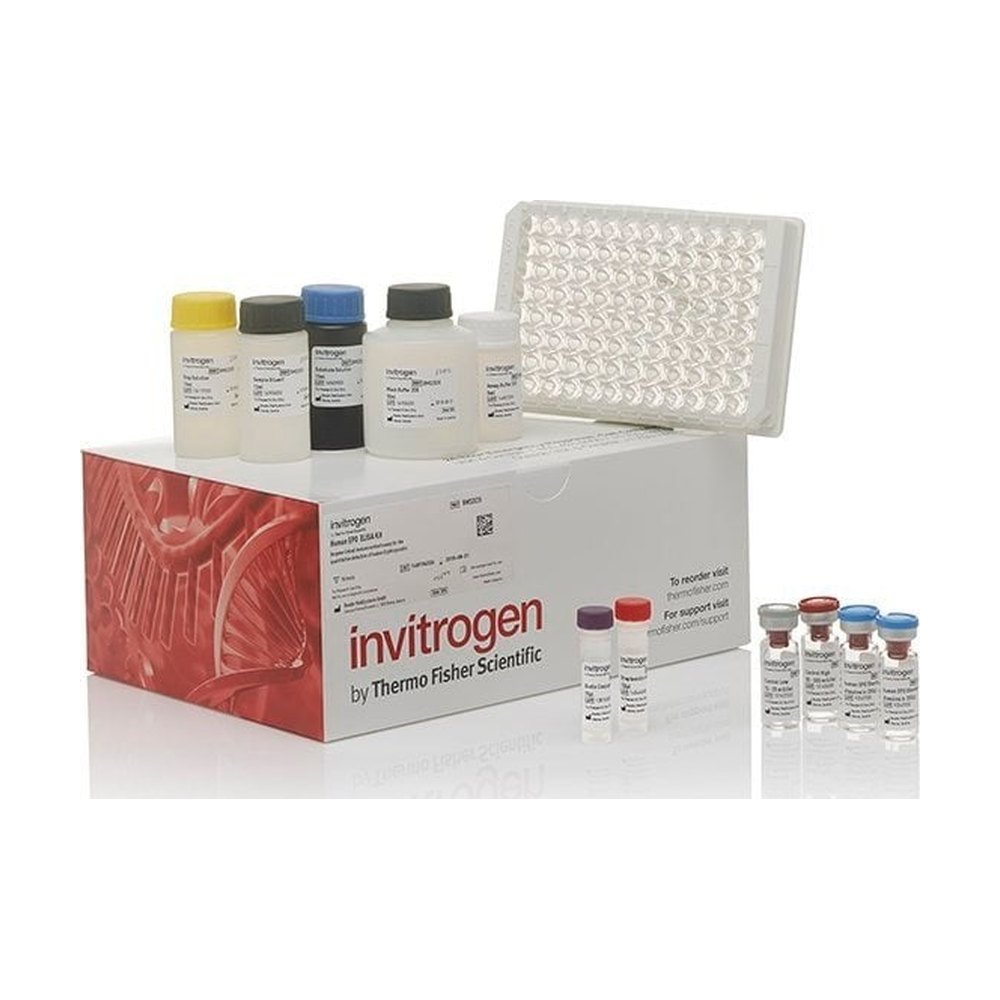
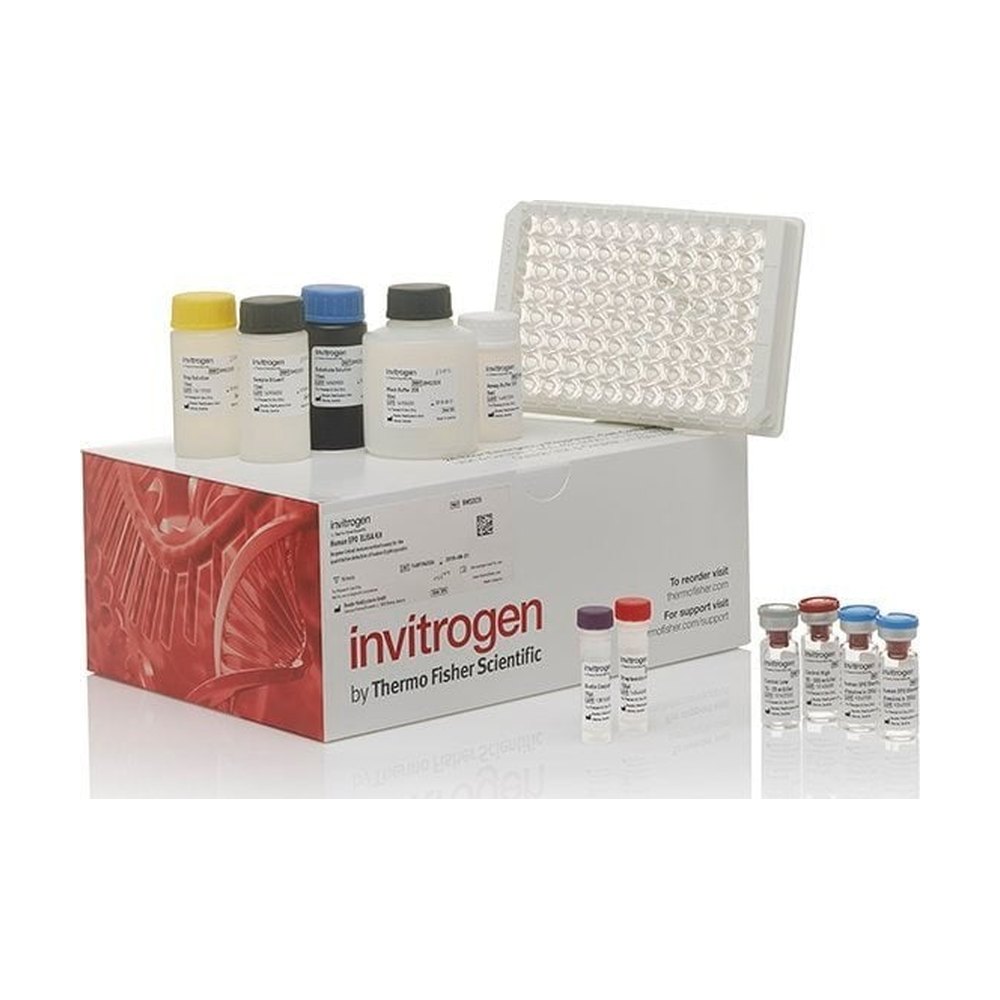
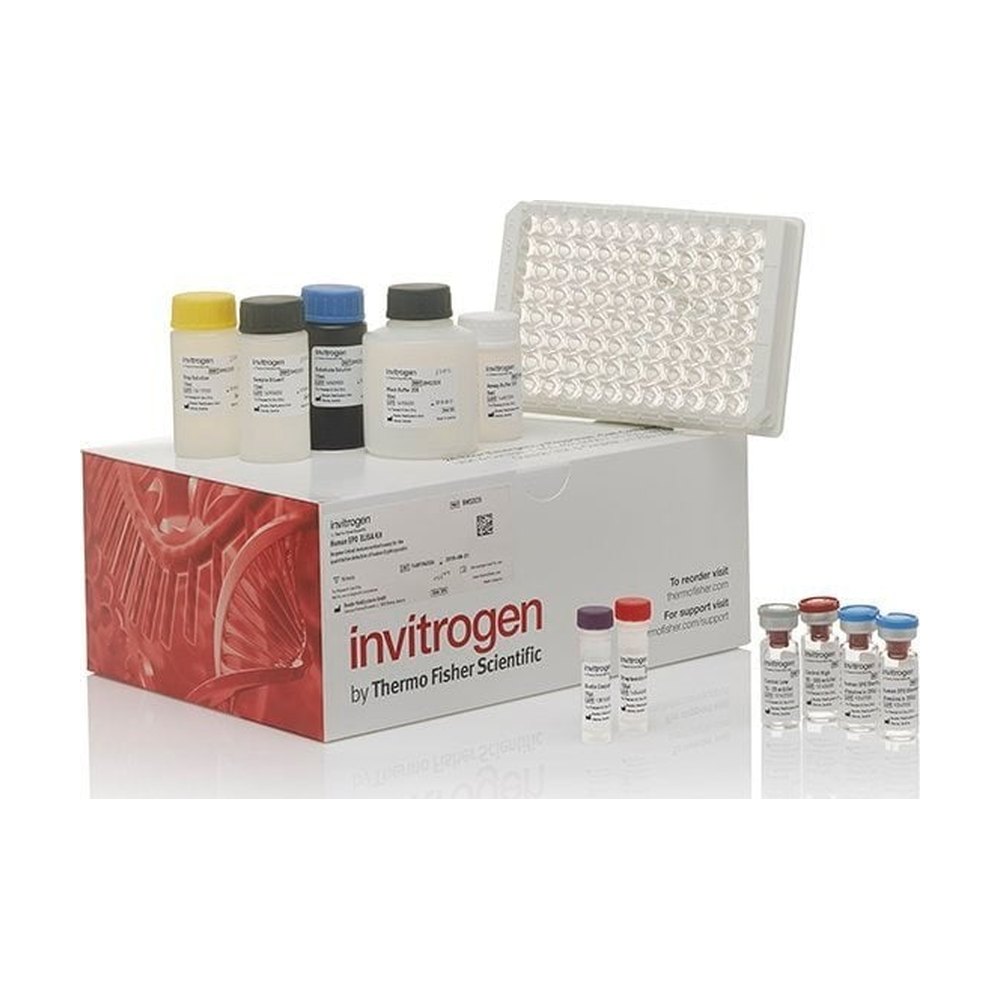
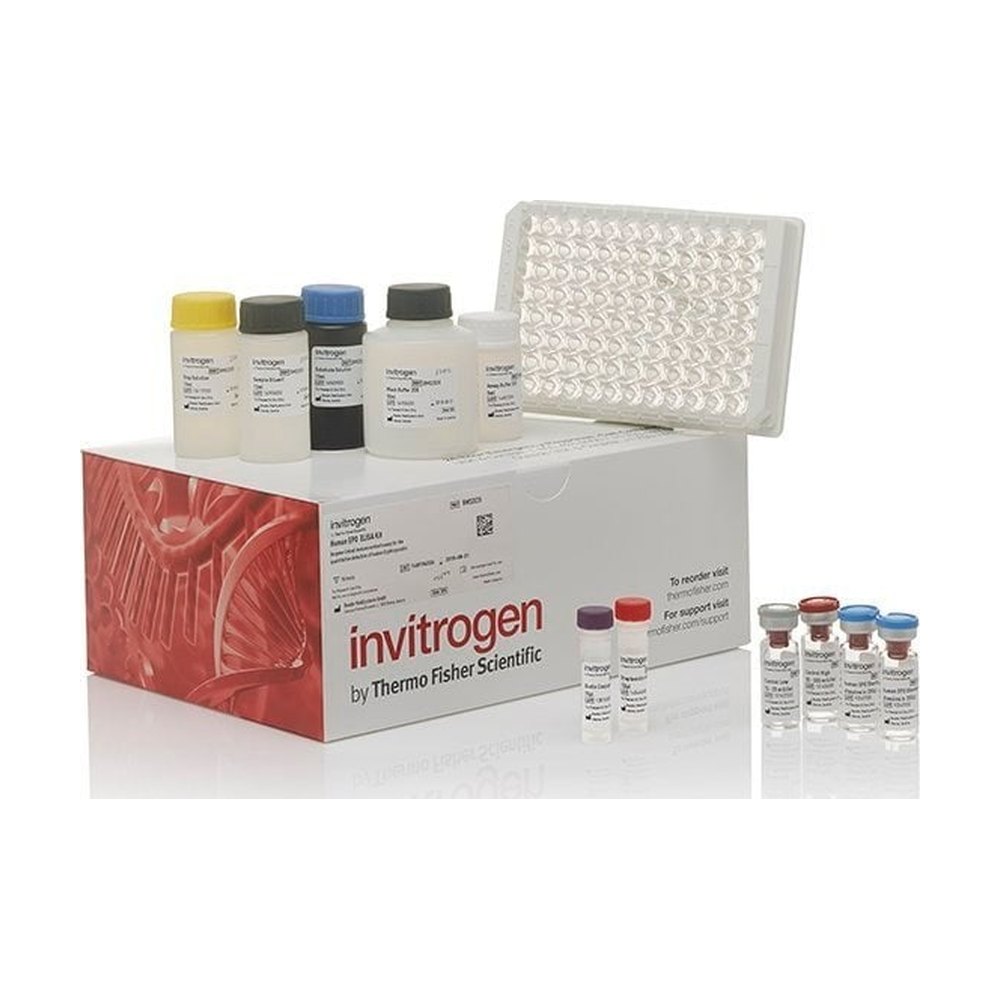
Human Cathepsin A/CTSA quantitates human Cathepsin A/CTSA in serum, plasma, supernatant. The assay will exclusively recognize both natural and recombinant human Cathepsin A/CTSA.
Accession number
AU019505 ; bêta-galactosidase 2 ; protéine protectrice de la bêta-galactosidase ; carboxypeptidase C ; carboxypeptidase L ; carboxypeptidase kininase type Y ; carboxypeptidase-L ; cathepsine A ; Ctsa ; désamidase ; GLB2 ; GSL ; carboxypeptidase A lysosomale ; protéine protectrice lysosomale ; chaîne de 20 kDa de protéine protectrice lysosomale ; chaîne de 32 kDa de protéine protectrice lysosomale ; NGBE ; PPCA ; Ppgb ; cathepsine de protéine protectrice A ; protéine protectrice pour la bêta-galactosidase ; kininase urinaire
Dose range
0.016 to 10 ng/ml
Sensitivity of the dosage
0.016 ng/ml
Conjugate
Biotin
Product type
ELISA
Brand
Invitrogen
Human Cathepsin A/CTSA quantitates human Cathepsin A/CTSA in serum, plasma, supernatant. The assay will exclusively recognize both natural and recombinant human Cathepsin A/CTSA.
Human Cathepsin A/CTSA quantitates human Cathepsin A/CTSA in serum, plasma, supernatant. The assay will exclusively recognize both natural and recombinant human Cathepsin A/CTSA.
The proteolytic catepsin d-enzyme family comprises several different classes of proteases. The cysteine protease class is cathepsins B, L, H, K, S and O. Cathepsins D and E are the aspartyl protease class. Serin protease class includes cathepsin G. Cathepsins play a role in cell metabolism and contribute to peptide biosynthesis and protein degradation. Cathepsin A, a carboxypeptidase serine, exists in a high molecular weight lysosome complex with b-galactosidase (b-gal) and a-neuraminidase (Neu1). Cathepsin A is used to protect b-gal and Neu1 from intralysosomal proteolysis. The deficiencies in cathepsin A lead to b-gal and Neu1 deficiencies. The gene that encodes human cathepsin corresponds to chromosome 20q13.12. Mutations of this gene cause glactosialidiasis, a lysosome storage disorder resulting from b-gal and Neu1 deficiencies.
Sensitivity
Sensitivity of the dosage: 0.016 ng/ml.
Measurement range
Dose range: 0.016 to 10 ng/ml.
Duration of dosing
Total duration of dosing: 4 h 45 min.
Target
Target: Cathepsin A.
Samples
Type of sample: Plasma, Serum, Surnatant (Serum volume, 50 µl; plasma, 50 µl; supernatant, 50 µl).