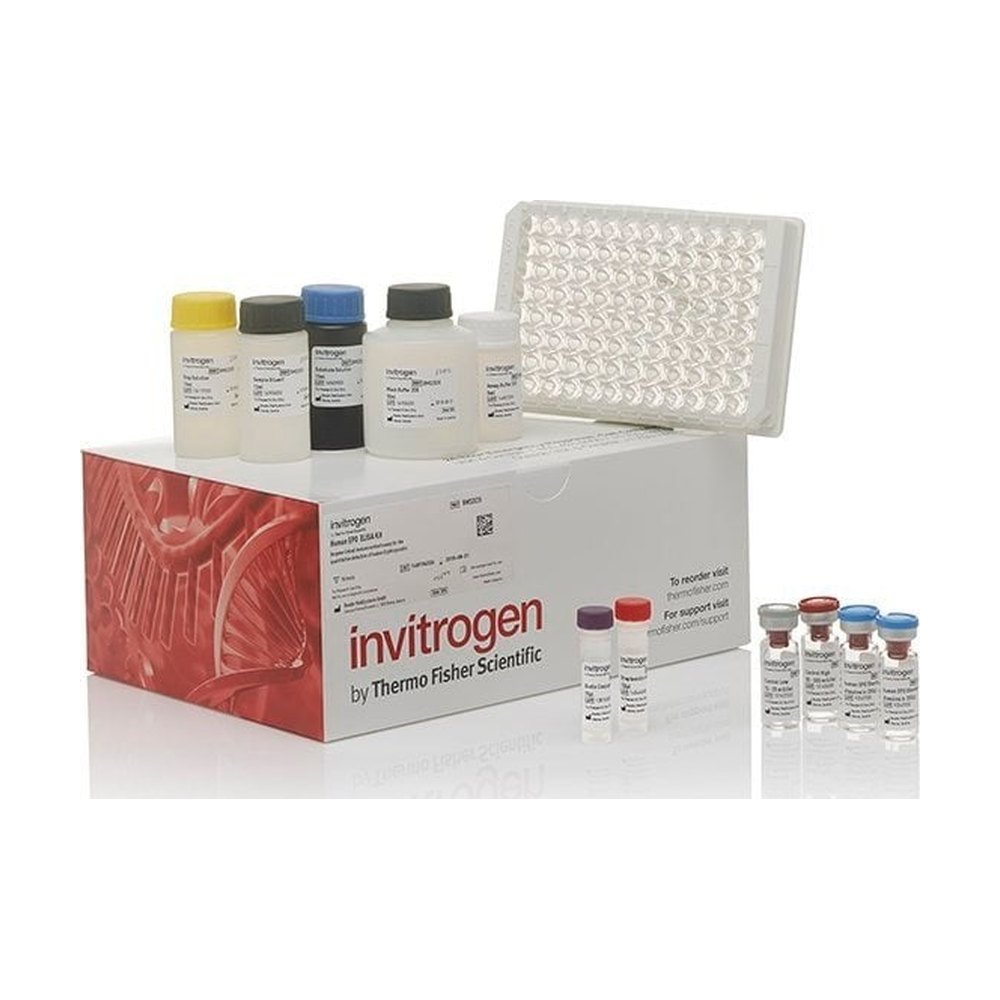
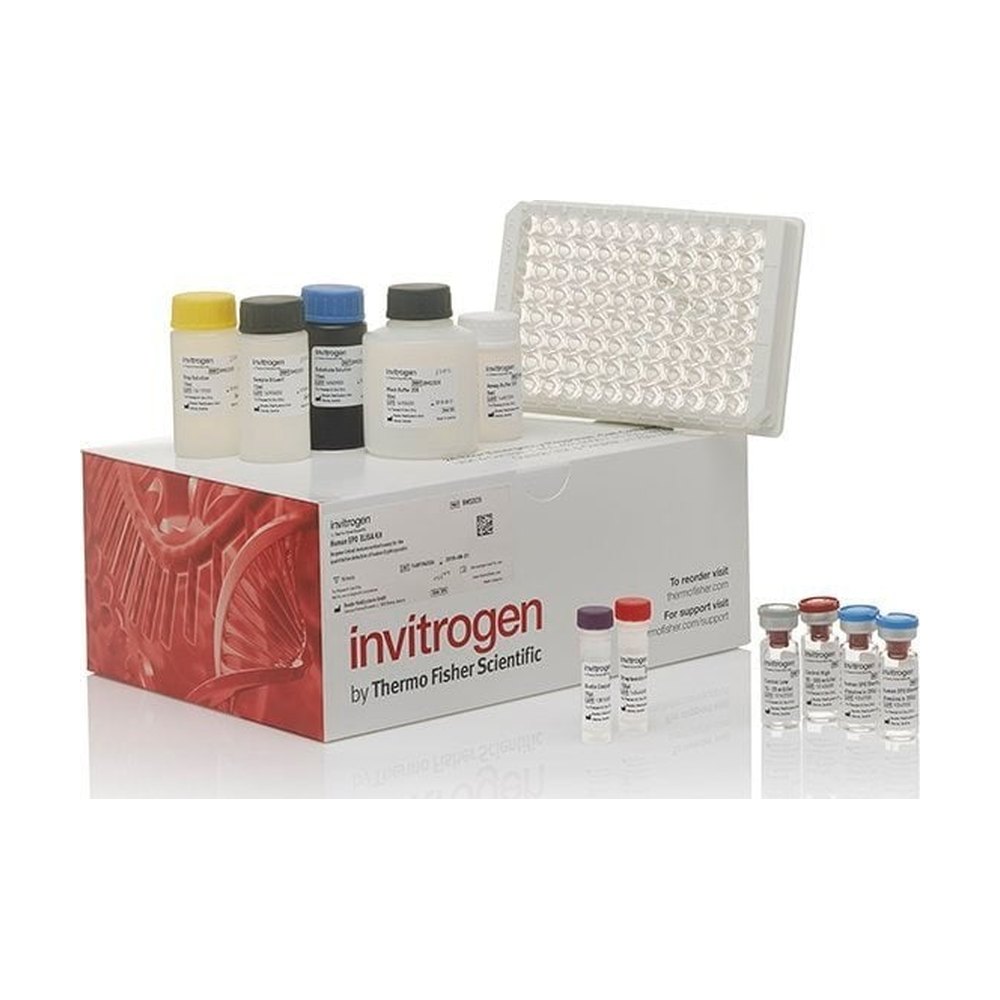
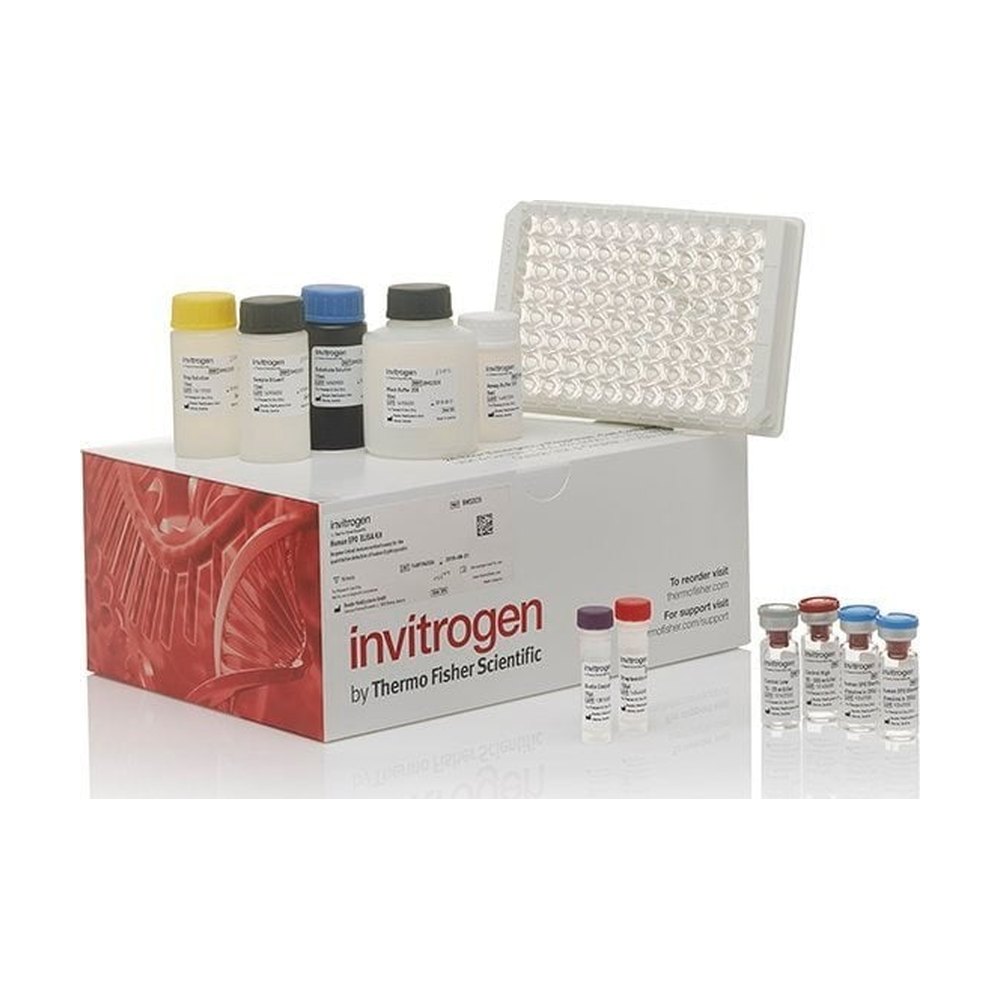
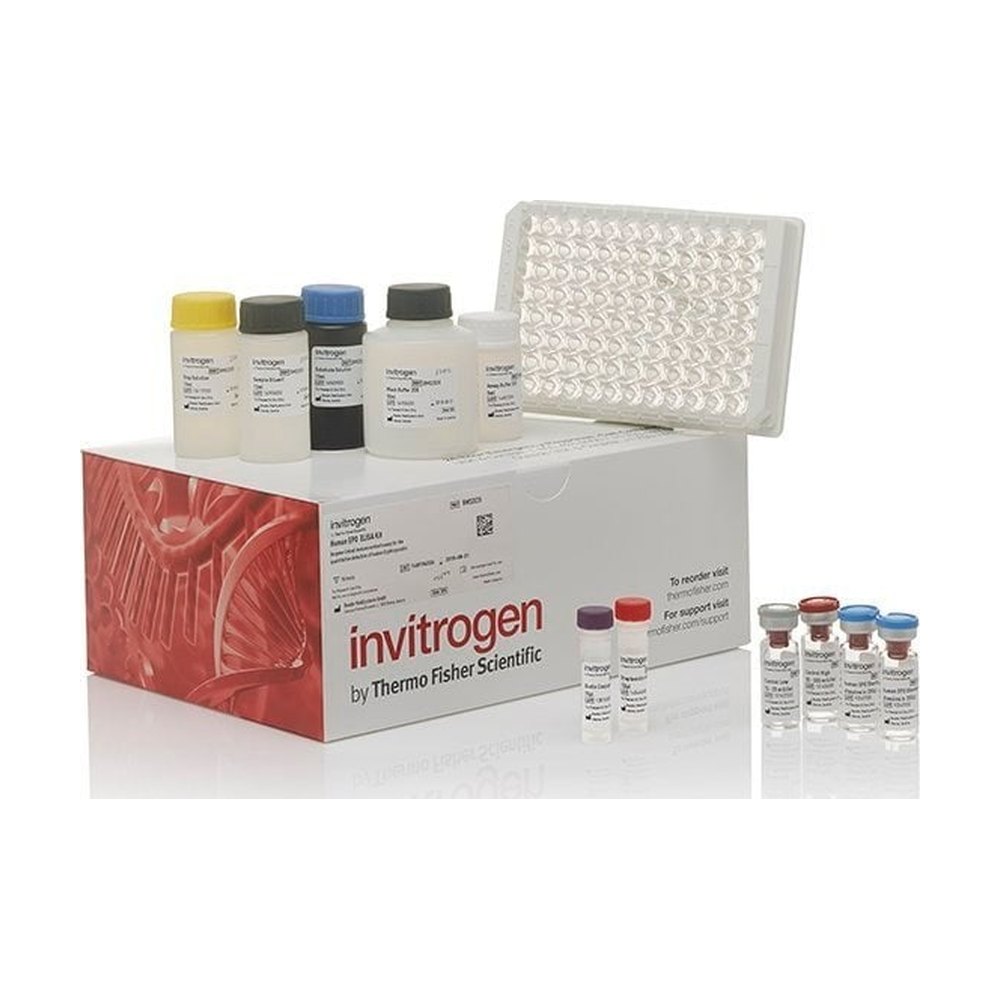
Kit ELISA Pepsinogen I sandwich (Hu PGI) (human): quantitative determination of Hu PGI in serum, plasma or cell culture medium. The test recognizes only the natural and recombinant forms of Hu PGI.
Accession number
P0DJD7
Dose range
24.58-6000 pg/ml
Sensitivity of the dosage
20 pg/ml
Calibration range
20 pg/ml to 6.000 pg/ml
Dose
ELISA solid-phase sandwich
Brand
Invitrogen
Kit ELISA Pepsinogen I sandwich (Hu PGI) (human): quantitative determination of Hu PGI in serum, plasma or cell culture medium. The test recognizes only the natural and recombinant forms of Hu PGI.
Kit ELISA Pepsinogen I sandwich (Hu PGI) (human): quantitative determination of Hu PGI in serum, plasma or cell culture medium. The test recognizes only the natural and recombinant forms of Hu PGI.
Method principle: This ELISA solid phase sandwich test (immuno-enzymatic dose) measures the amount of target bound between a pair of matched antibodies. A specific target antibody is pre-adsorbed into the wells of the supplied microplate. Samples, standards or controls are added to these wells and bind to immobilized antibodies (capture antibodies). The sandwich is formed by adding the second antibody (detection antibody), then a substrate solution reacts with the enzyme-antibodies-target complex to produce a measurable signal. The intensity of this signal is directly proportional to the concentration of the target present in the original sample.
Rigorous validation: Each batch manufactured from this ELISA kit is checked for criteria such as sensitivity, specificity, accuracy and reproducibility from one batch to another (see the package leaflet for more information on validation).
Pepsinogen is the inactive precursor form of pepsin, one of the main proteolytic enzymes secreted by the gastric mucosa. Pepsinogen is synthesized in the gastric mucosa by the main cells. After secretion, pepsinogen is activated in the presence of HCl, creating an acidic environment in the stomach, allowing pepsinogen to unfold and climax in an autocatalytic manner. Pepsin consists of a single polypeptide chain and originates from its precursor, pepsinogen, by removing a segment of 41 amino acids from the N-terminal end.