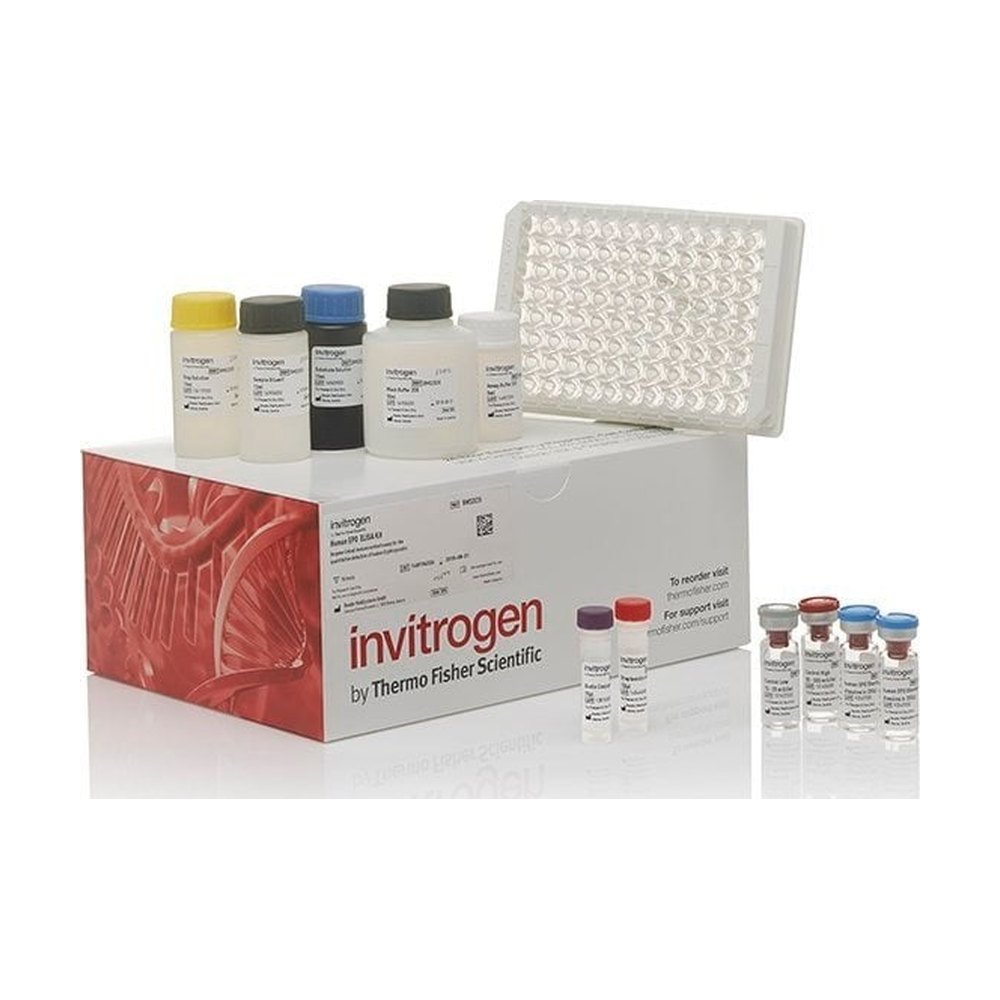
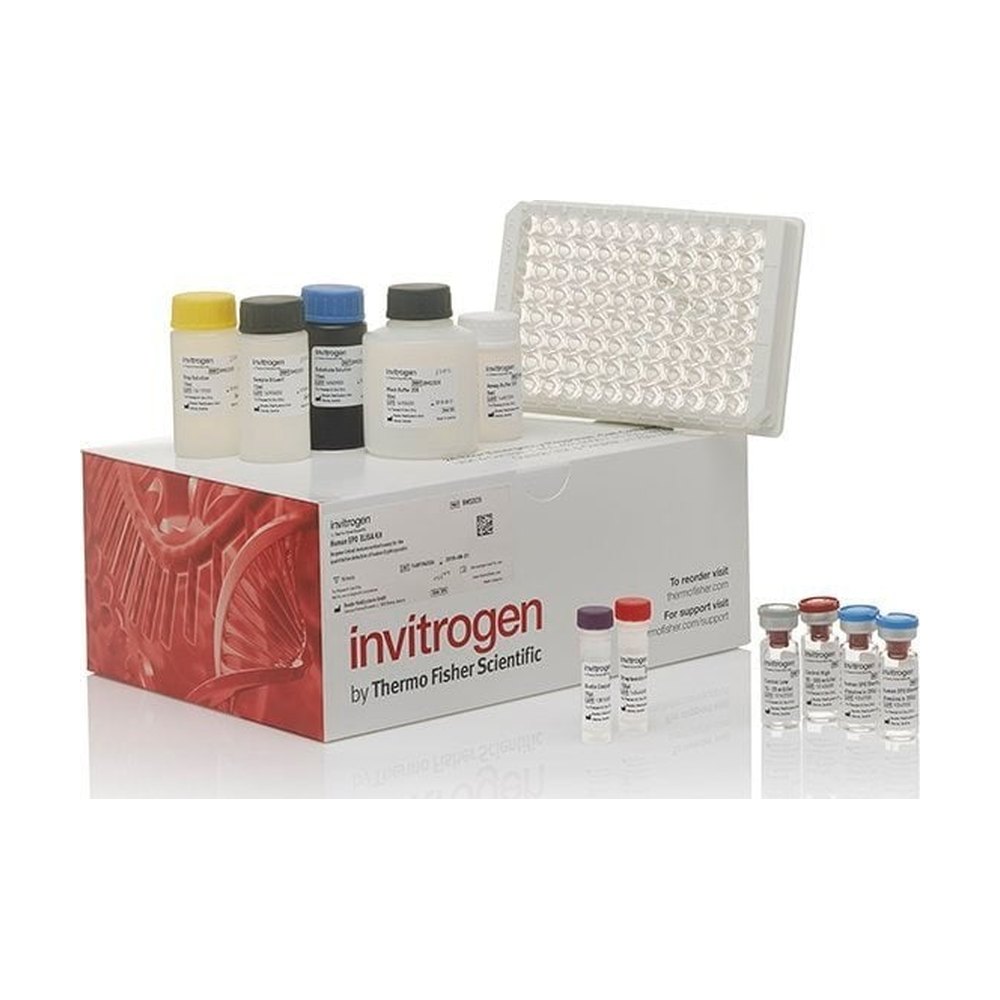
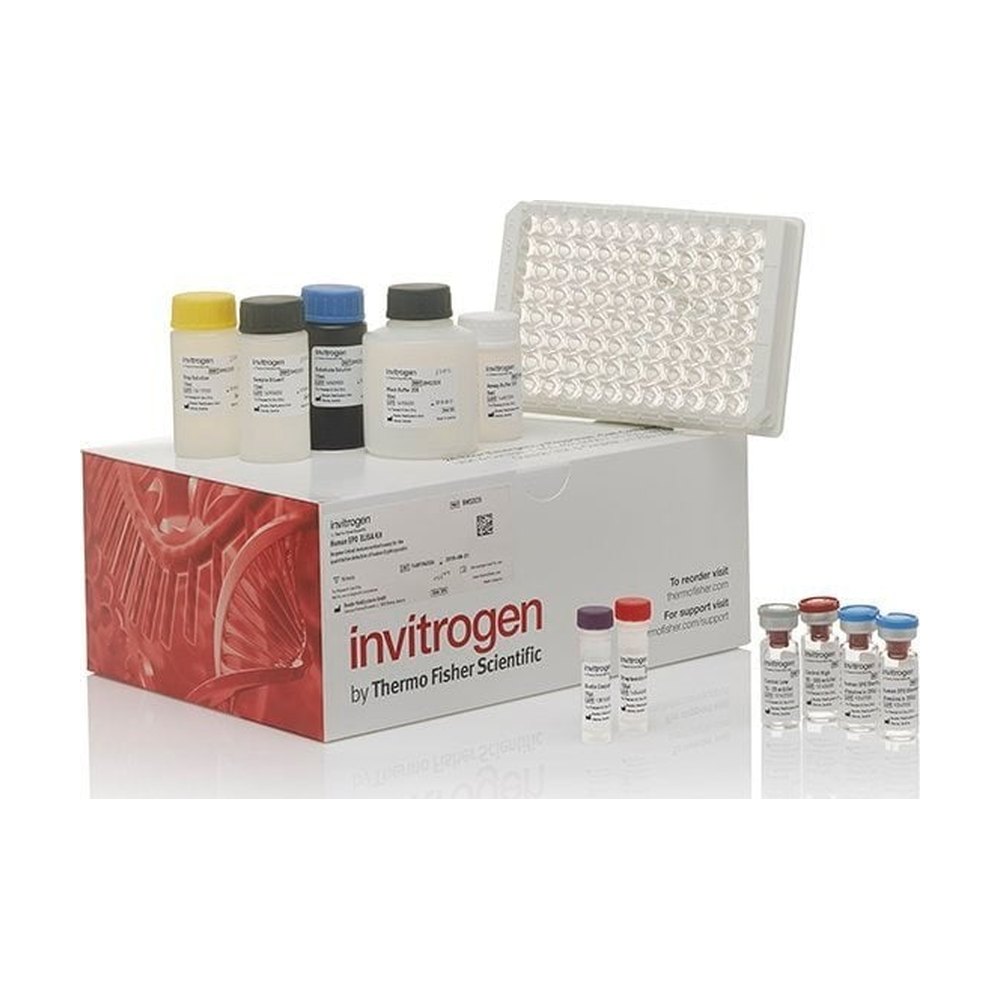
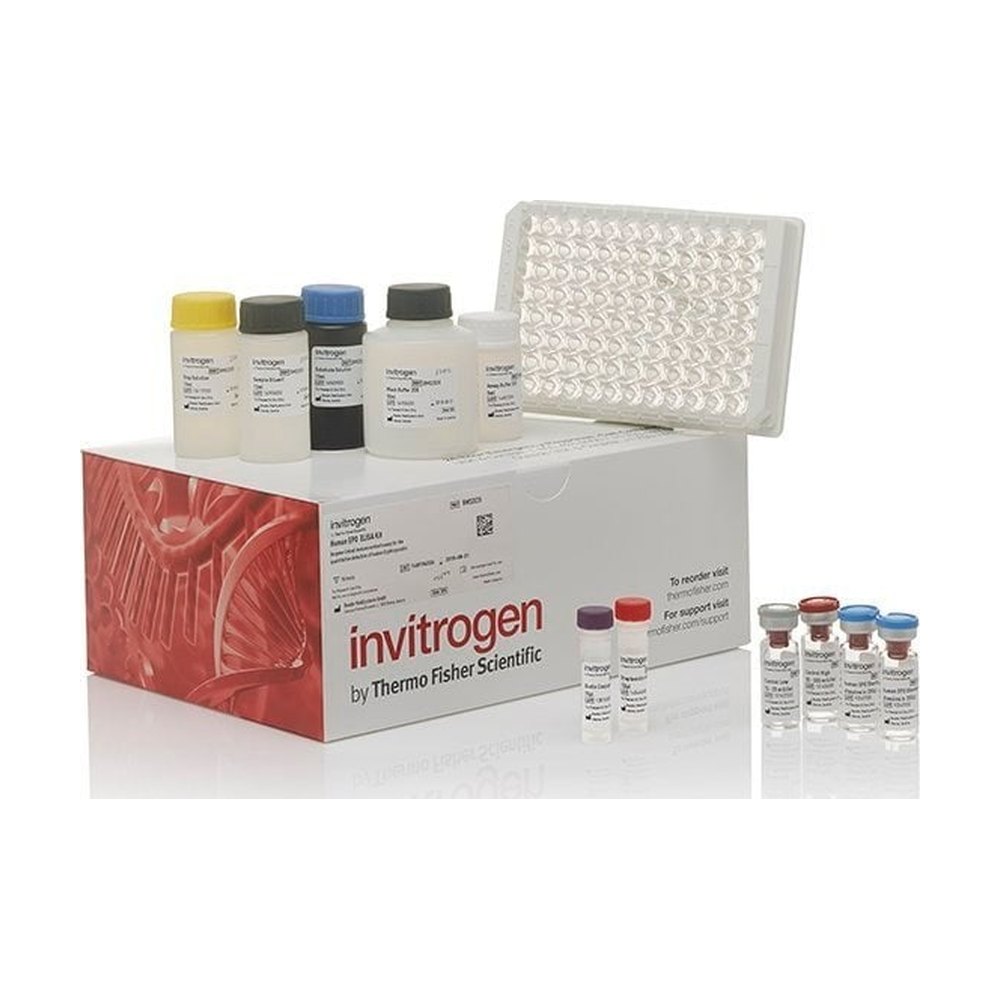
Kit ELISA Flt-3 Ligarnd sandwich (sing): quantitative determination of Rhesus Mk Flt-3L in serum, plasma or cell culture medium. The test exclusively recognizes the natural and recombinant forms of Mk Flt-3L.
Accession number
S/O
Dose range
16.38-4000 pg/ml
Sensitivity of the dosage
12 pg/ml
Calibration range
12 pg/ml to 400 pg/ml
Dose
ELISA solid-phase sandwich
Brand
Invitrogen
Kit ELISA Flt-3 Ligarnd sandwich (sing): quantitative determination of Rhesus Mk Flt-3L in serum, plasma or cell culture medium. The test exclusively recognizes the natural and recombinant forms of Mk Flt-3L.
Kit ELISA Flt-3 Ligarnd sandwich (sing): quantitative determination of Rhesus Mk Flt-3L in serum, plasma or cell culture medium. The test exclusively recognizes the natural and recombinant forms of Mk Flt-3L.
Method principle: This ELISA solid phase sandwich test (immuno-enzymatic dose) measures the amount of target bound between a pair of matched antibodies. A specific target antibody is pre-adsorbed into the wells of the supplied microplate. Samples, standards or controls are added to these wells and bind to immobilized antibodies (capture antibodies). The sandwich is formed by adding the second antibody (detection antibody), then a substrate solution reacts with the enzyme-antibodies-target complex to produce a measurable signal. The intensity of this signal is directly proportional to the concentration of the target present in the original sample.
Rigorous validation: Each batch manufactured from this ELISA kit is checked for criteria such as sensitivity, specificity, accuracy and reproducibility from one batch to another (see the package leaflet for more information on validation).
Flt3 ligand (FMS-related tyrosine kinase 3) is a growth factor that stimulates growth and differentiation of early hematopoetic stem cells. FLT3 ligand alone has low biological effects and is synergistic with other colony stimulation factors to induce proliferation and differentiation of myeloid and lymphoid cell lines. Recent studies have suggested that Flt3 ligand plays an important role in the development and expansion of dendritic cells in vivo, and that it can influence NK cell survival through this mechanism. Flt3 Ligand transcripts are detectable in most cell types and tissues, although protein n- was found only in stromal cells and T cells. It is most often expressed as a transmembrane cell surface protein, although the treatment may produce a soluble secreted isoform.