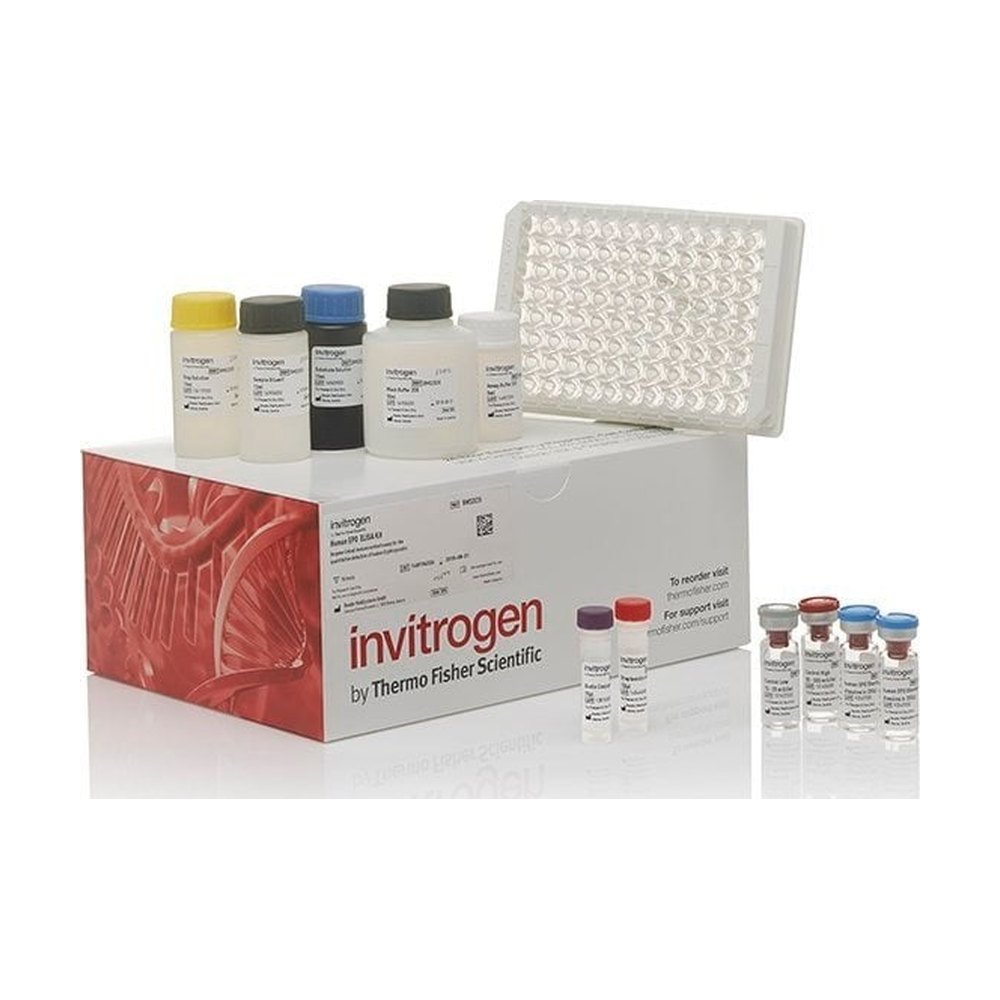
Human CLEC9A quantitates human CLEC9A in serum, plasma, supernatant. The assay will exclusively recognize both natural and recombinant human CLEC9A.
Human CLEC9A quantitates human CLEC9A in serum, plasma, supernatant. The assay will exclusively recognize both natural and recombinant human CLEC9A.
CLEC9A is a type C lectin-like receptor in CTLR group V that functions as a d-activation receptor and is expressed on myeloid cell lines. This protein is also expressed on the cell surface and acts as glycosylated dimers that mediate l的enocyteosis, but not phagocytosis (Poulin LF et al, 2010). It facilitates the absorption and presentation of antigens and can provide an appropriate target for the administration of antibody-mediated antigens. CLEC9A is important for transmitting information from necrotic cells to T cells and defines a way through which adaptive immune responses can be initiated in the absence of infection. He recruited Syk to mediate necrosis detection by the main subset of DC involved in the regulation of cross-boot initiation to antigens associated with cells. Signalling via this kinase is done by a new pathway involving CARD9 that induces a variety of cellular responses, including cytokine induction (such as TNF, IL-6, IL-10, IL-23 and IL-2), respiratory bursting and arachidonic acid production. In addition, it induces adaptive TH17 (T-auxiliary type 17) responses in vivo. The expression of CLEC9A is very limited in peripheral blood, being detected only on the DC BDCA3+ and on a small subset of the CD14+ CD16- monocytes. The CLEC9A is used as a new marker to distinguish subtypes of domain controllers.
Sensitivity
Sensitivity of the assay: 0.12 ng/mL.
Measurement range
Dose range: 0.12 to 25 ng/mL.
Duration of dosing
Total duration of dosing: 4 h 45 min.
Samples
Type of sample: Plasma, Serum, Surnatant (plasma volume, 50 µl; Serum, 50 µl; Supernatant, 50 µl).
Technical specifications
| General |
|---|
| Brand | Invitrogen |
|---|
| Supplier ref. (Fisher Scientific) | 17134859 |
|---|
| Specifications |
|---|
| Accession number | 9830005G06Rik; CD370; CLEC9A; family of lectin-type C 9-member A domains; family of lectin-type C 9-member A domains; group receptor of natural lectin-dendritic cells 1; DNGR1; Dngr-1; heee9341; RGD1562513; UNQ9341; UNQ9341/PRO34046 |
|---|
| Dose range | 0.12 to 25 ng/mL |
|---|
| Sensitivity of the dosage | 0.12 ng/mL |
|---|
| Conjugate | Biotin |
|---|
| Product type | ELISA |
|---|
| Type of sample | Plasma, Serum, Surnatant |
|---|
| For use with (equipment) | Colorimetric microplate reader |
|---|
| Genetic identification (Enter) | Q6UXN8 |
|---|
| Gene symbol(s) | CLEC9A |
|---|
| Coefficient of inter-dose variation | <12% |
|---|
| Coefficient of intra-dose variation | <10% |
|---|
| Contents of kits | Pre-coated well plate, standard, dosing diluent concentrate, biotinylated detection antibody, SAV-HRP, washing pad, chromogen, stop solution, adhesive plate lids |
|---|
| Marker or dye | HRP |
|---|
| Quantity | 5 x 96 tests |
|---|
| Regulatory status | Use exclusively for research |
|---|
| Target | CLEC9A |
|---|
| Test time | 1 h 20 min |
|---|
| Physical characteristics |
|---|
| Volume of sample | Plasma, 50 µl; Serum, 50 µl; Supernatant, 50 µl |
|---|
| Storage and shipping |
|---|
| Storage conditions | 2°C to 8°C |
|---|
| Total duration of dosing | 4 h 45 min |
|---|
Origin and customs
| Manufacturer ref. | EH111RBX5 |
|---|
| Country of origin | United States |
|---|
A question or a specific configuration?
Contact us for a quote.