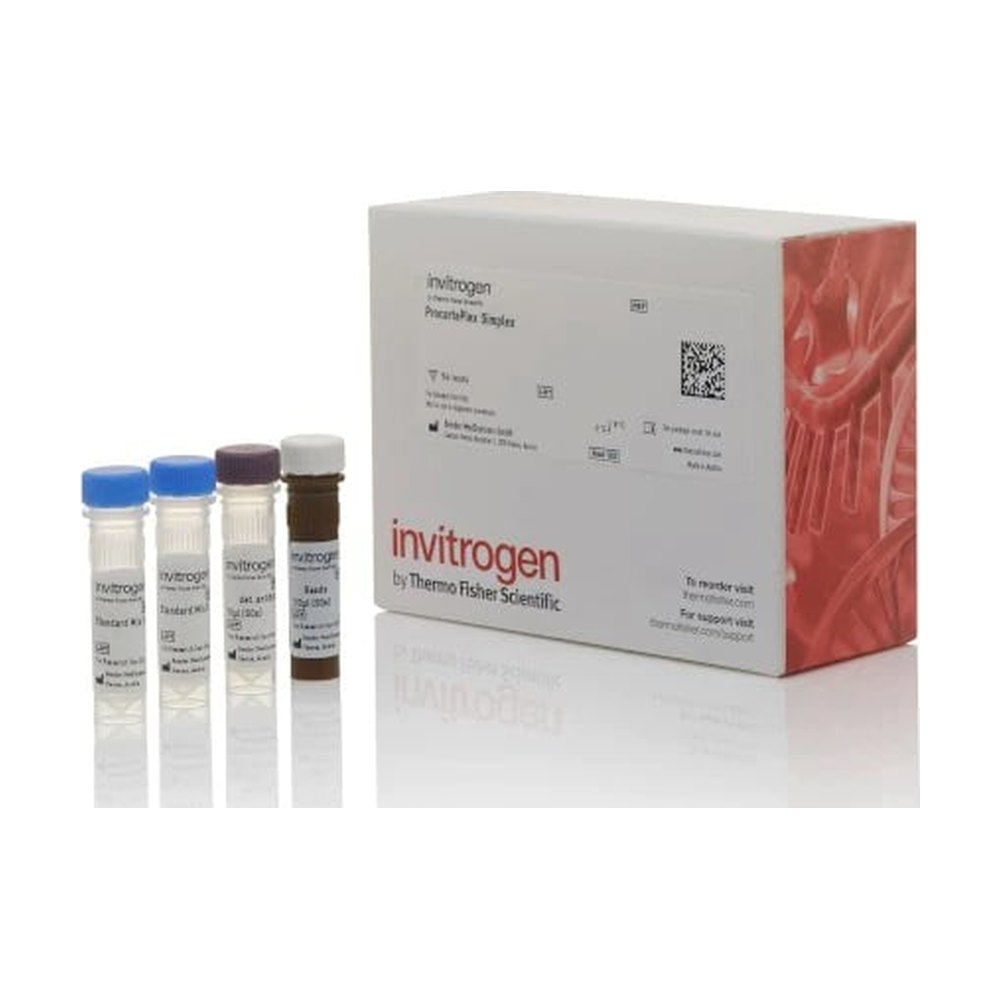
The 3 ProcartaPlex 9 plex Checkpoint for Human Immuno-Oncology Panel facilitates cancer research by analyzing nine immuno-oncological protein targets in a single well using Luminex xMAP technology.The simultaneous detection of the...
The 3 ProcartaPlex 9 plex Checkpoint for Human Immuno-Oncology Panel facilitates cancer research by analyzing nine immuno-oncological protein targets in a single well using Luminex xMAP technology. Simultaneous detection of these targets can help to understand the role of the B7 family of immune control point regulators in controlling and suppressing repos immune function of T cells and NK cells.
This panel can be combined with simplexes and other panels such as the 1 ProcartaPlex 14 plex panel for immuno-oncology (EPX14A-15803-901) and 2 ProcartaPlex 14 plex panel for immuno-oncology (EPX140-15815-901), which provide 28 additional protein targets for immuno-control point profiling.
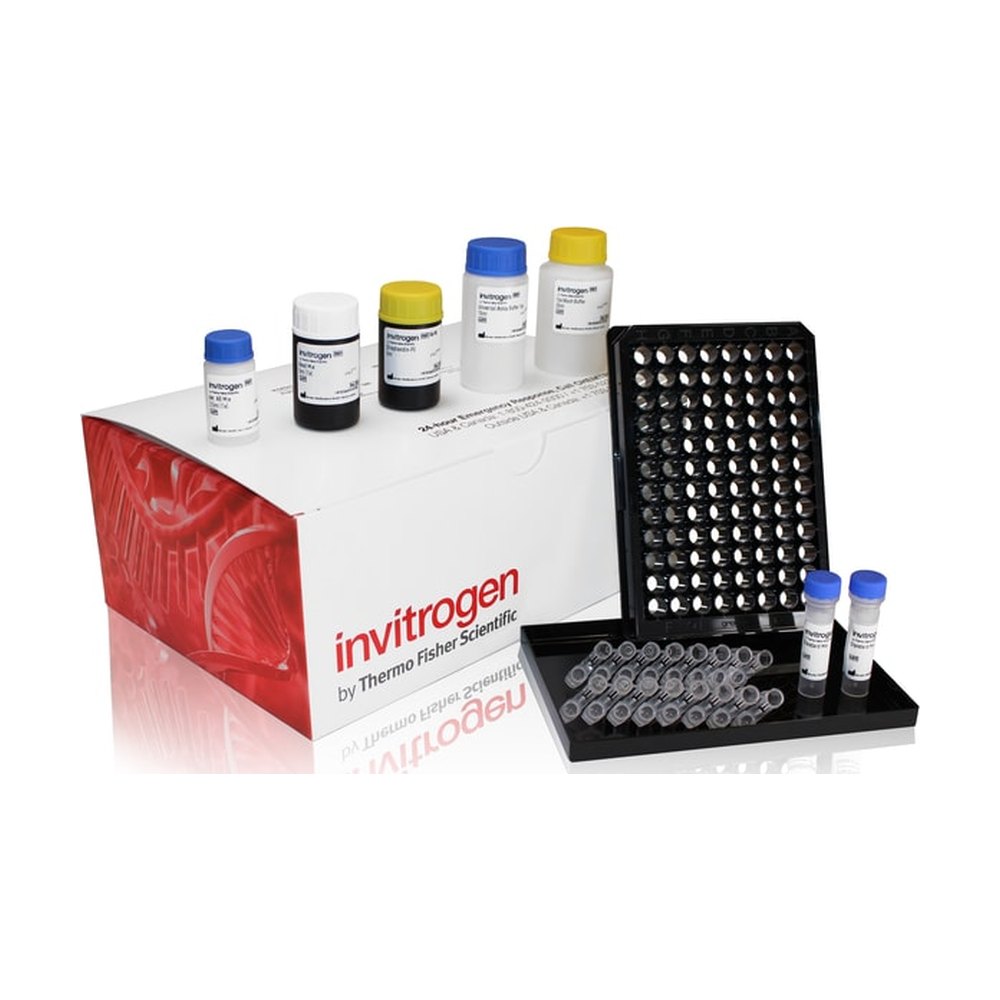
ProcartaPlex preconfigured panels are subjected to extensive testing for the combinationability, interference and cross-reactivity of analytes to ensure the highest level of validation and accuracy.ProcartaPlex multiplex panels are available in several formats for six species (human, mouse, rat, non-human primate, pork and dog) and are supplied with the reagents necessary to perform the dosage.
Target list [microbead region]:B7-H6 [42], CD276 (B7-H3) [72], CD47 (IAP) [74], CD48 (BLAST-1) [19], CD134 (OX40) [55], ICOS Ligand (B7-H2) [34], TIMD-4 [39], S100A8/A9 [76], VISTA (B7-H5) [64]
About ProcartaPlex strengths for Luminex platform
ProcartaPlex immunoassays are based on the principle of ELISA sandwiches and use two highly specific antibodies binding to different epitopes of a protein to simultaneously quantify all target proteins using a Luminex instrument.ProcartaPlex multiplex assays require up to 25 μl of plasma or serum, or 50 μl of cell culture supernatant. The results analysed are available after only four hours.
•Reproducible and reliable results: panel validated according to the highest industry standard, including for protein target combinability and cross-reactivity tests
•More results per sample: possibility of simultaneously measuring several protein targets in a single sample of 25-50 μl
•Economy Luminex well established: widely referenced multixing platform for protein detection and quantification
ProcartaPlex assays use Luminex xMAP (multianalyte profiling) technology to simultaneously detect and quantify up to 80 protein targets in a single sample of 25-50 μl plasma, serum, cell culture supernatant and other body fluids.
MagPlex Luminex superparamagnetic microspheres microbeads in the ProcartaPlex assay are coloured in the mass with precise proportions of red and infrared fluorophores to create 100 spectrally unique signatures that can be identified by Luminex xMAP detection systems (Luminex 200, FLEXMAP 3D and MAGPIX systems).Similar to a ELISA sandwich, ProcartaPlex uses paired antibody pairs to identify the protein of interest.In a multiplexed assay, each single-spectrum microbead is marked with antibodies specific to a single protein target, and protein-bound proteins are identified with biotinyl antibodies and streptavidine–R-phycoerythrin (RPE).Conjugation of protein-specific antibodies to a distinct microbead allows multiple targets to be analyzed in a single well.
The most significant difference between a ProcartaPlex and ELISA test is that the capture antibody in the ProcartaPlex test is combined with a magnetic microbead and is not adsorbed to the microplate well, so that the ProcartaPlex test reagents float freely in the solution.For detection, for example, Luminex 200 instrument, contains two lasers: one to distinguish the spectral signature from each ball and the other to quantify the amount of RPE fluorescence, ProcartaPlex multiplex assays can profile more protein targets using much less than the time required to make a traditional ELISA sandwich.The procartaPlex multix assays can be used to produce more protein targets using much less than the usual ELISA.