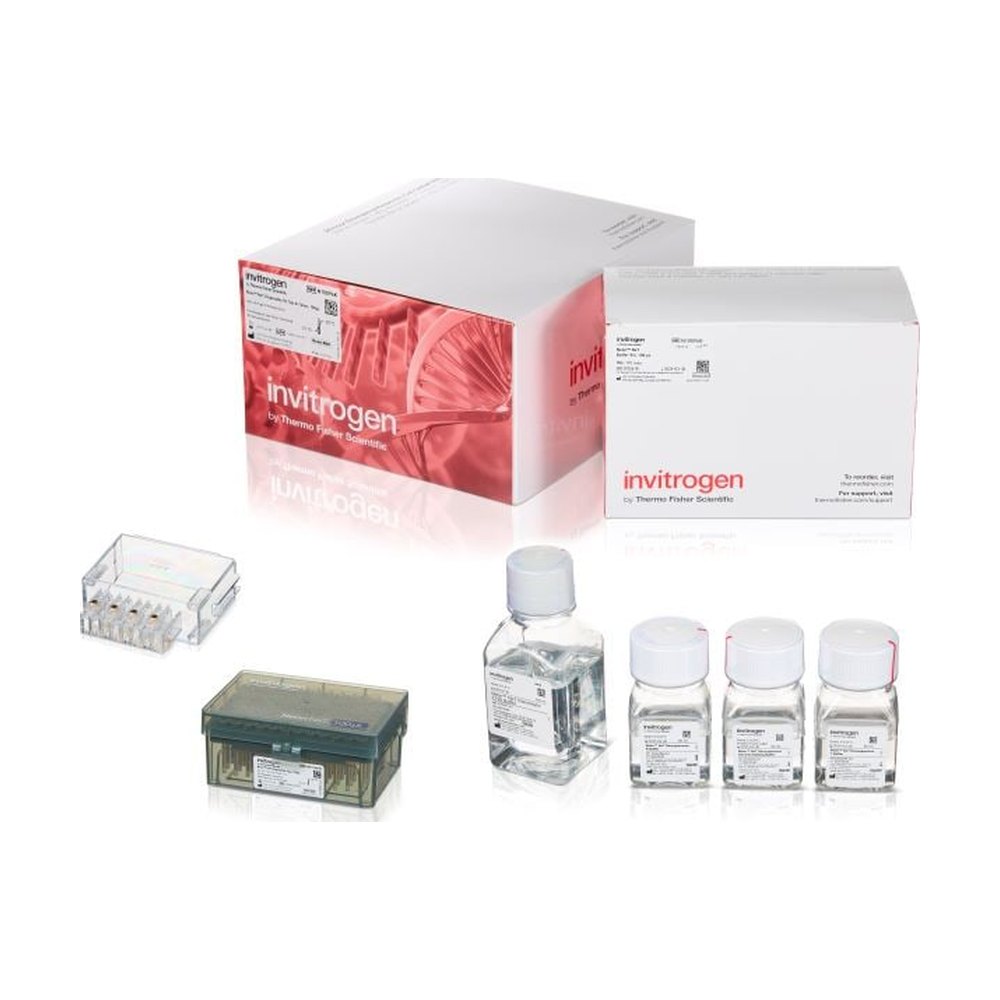
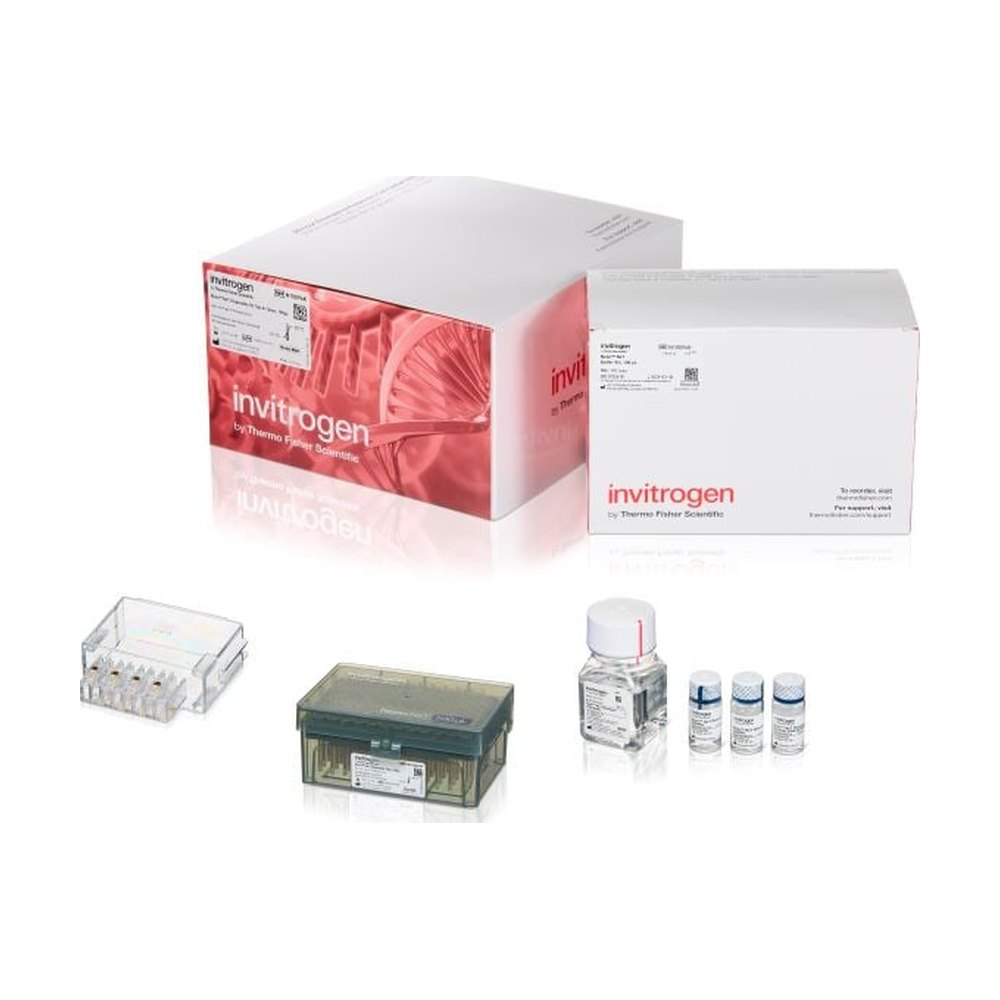
Lipofectamine™ 3000 Transfection Reagent is one of our most advanced lipid nanoparticle technology to deliver superior transfection performance by improving the results of applications and allowing them to...
The Lipofectamine™ 3000 Transfection Reagent is one of the most advanced lipid nanoparticle technology to deliver superior transfection performance by improving application results and enabling their reproducibility.
This reagent offers superior transfection efficiency and improves cellular viability for the most complete range of hard-to-transfect and common cells (e.g., HEK293, HeLa).
Successfully transfect the widest variety of biologically relevant cell types with a reagent that offers:
Effectively transfect cells that are difficult to transfect
The Lipofectamine 3000 reagent is designed to effectively transfect cells that are difficult to transfect, providing superior transfection performance over a wide range of cell types. Successfully transfected cell types include:
Fibroblast (3T3, COS-7)
Myoblast (C2C12, L6 CRL-1458)
Hepatitis (HepG2, HuH7)
Erythroleukemic cell (K562)
Breast carcinoma (MCF7, Hs578T)
Prostate carcinoma (LNCaP)
Lung carcinoma (A549, NCI-H460)
Osteosarcom (U-2 OS, Saos-2)
Colon carcinoma (Caco2, SW480)
Pancreatic carcinoma (PANC-1)
Skin Melanoma (SK-MEL-28)
Transfect current cells efficiently and cost-effectively
For common cell types, the Lipofectamine 3000 reagent is more cost-effective than the other reagents because of its high concentration and the small amount that it requires. The size of 1.5 ml provides up to 1.500 transfection reactions (in 24 well plates).
Achieve superior transfection efficiency while maintaining low toxicity
Lipofectamine 3000 reagent maintains high transfection efficiency in a robust dynamic range of lipid doses for quick and easy optimization. A low toxicity lipid dose (0.75 µl for 24 well plates) is suggested for applications requiring minimal cell disturbance.
Efficiency of high transfection in novel genomic modification applications
The Lipofectamine 3000 reagent is suitable for new genomic modification applications. It increases the likelihood of successful cleavage and recombination with TALEN or CRISPR through highly effective transfection, and ultimately by maximizing the effectiveness of genetic modification and simplifying downstream processes.