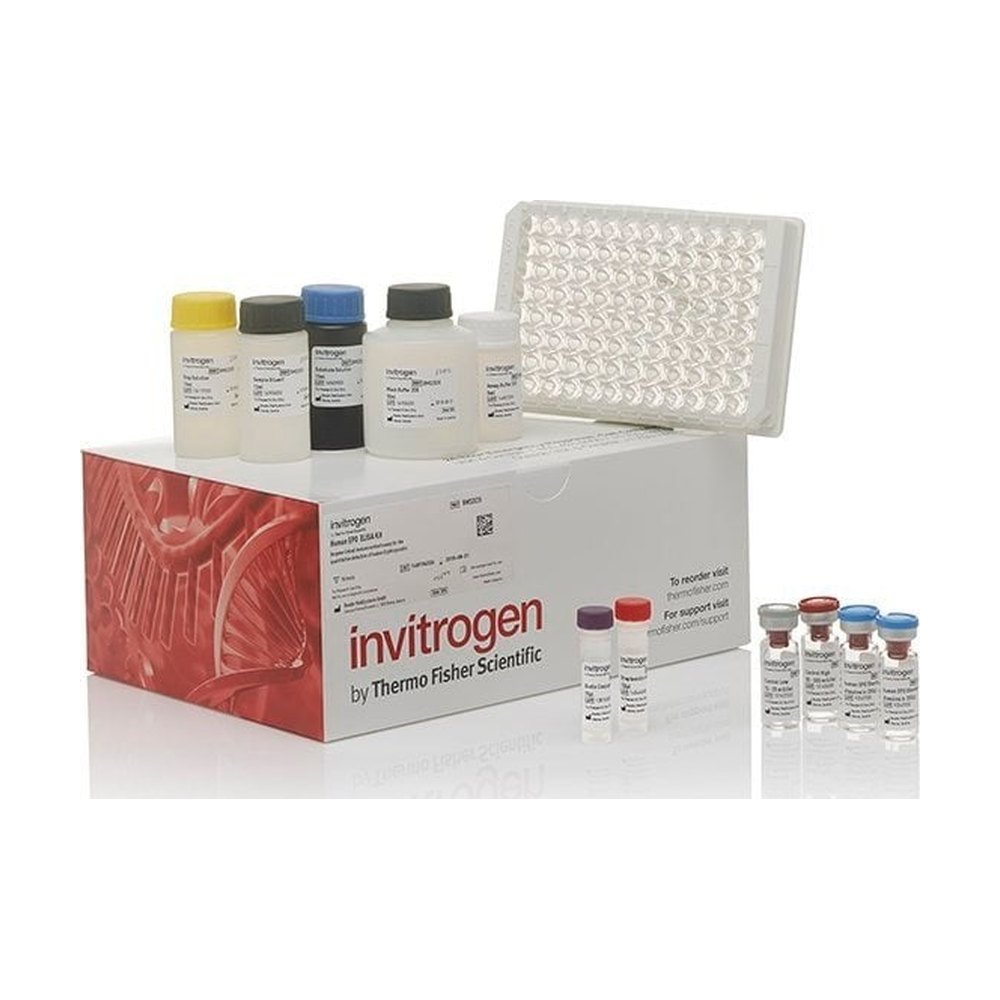
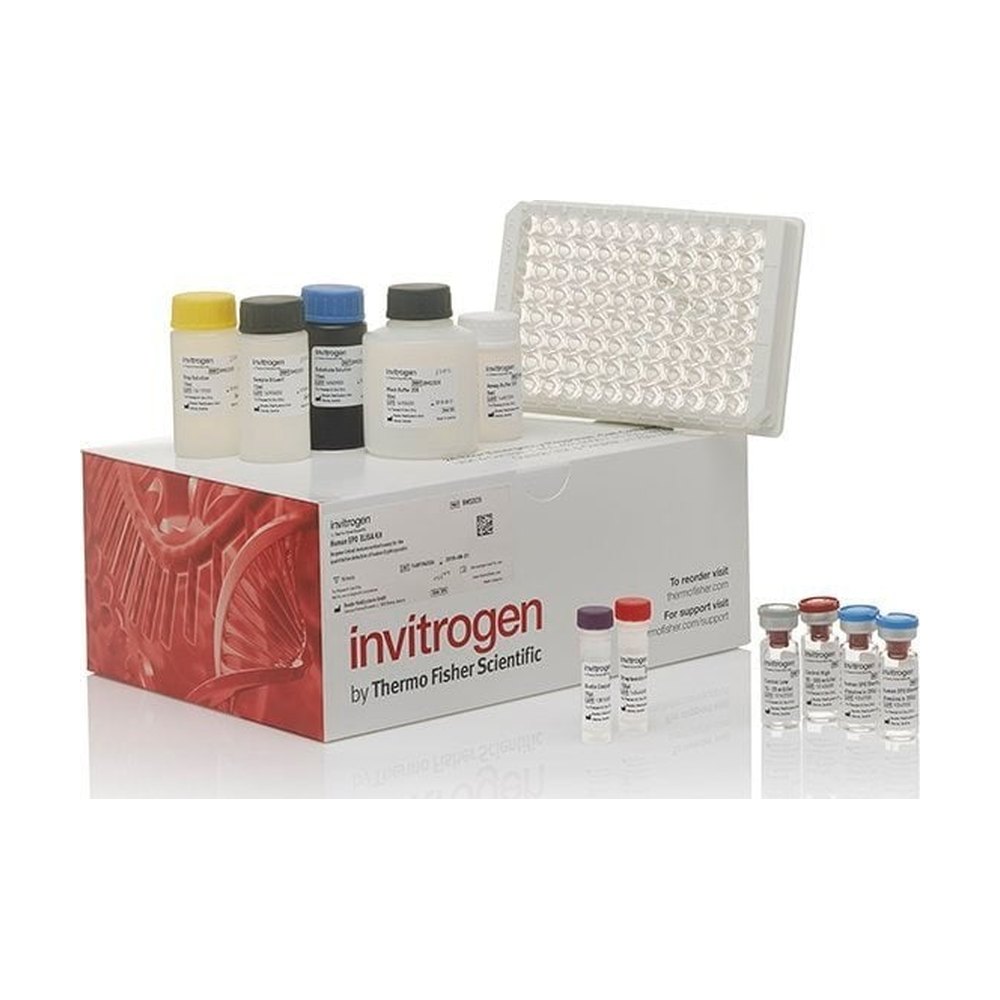
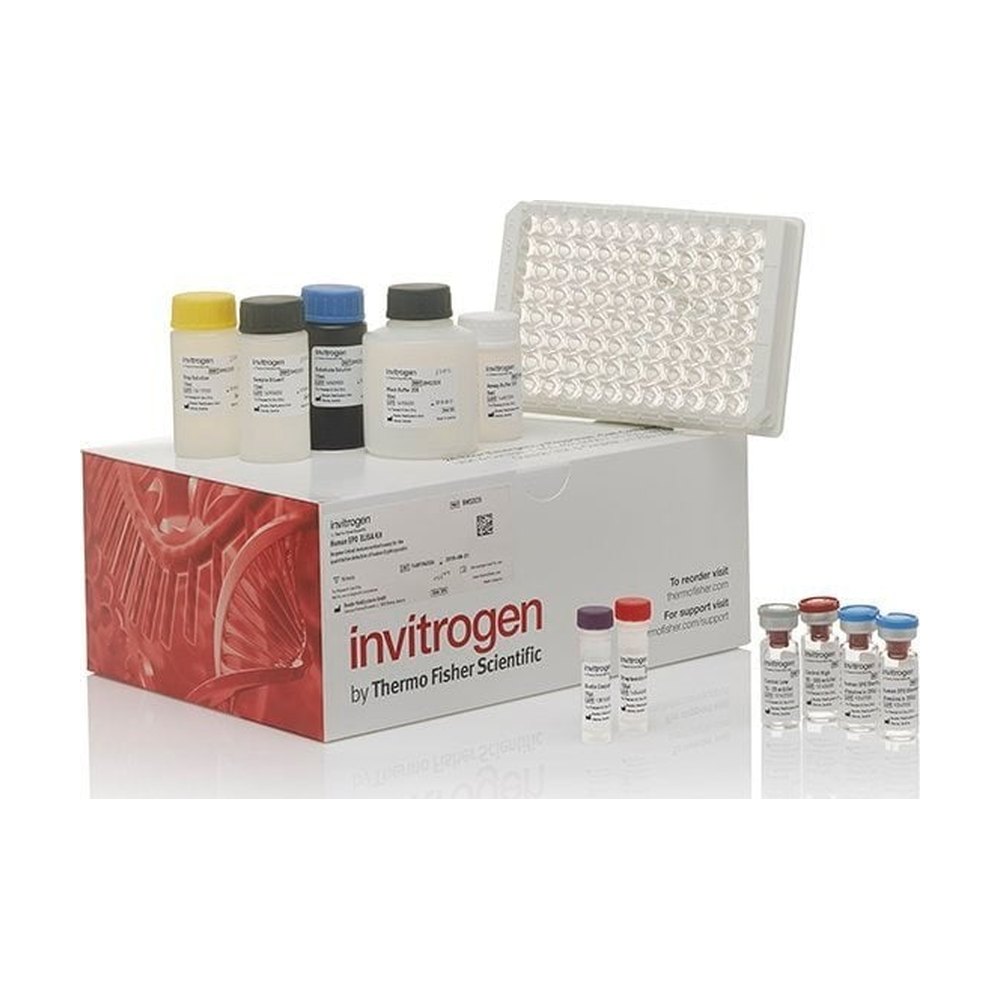
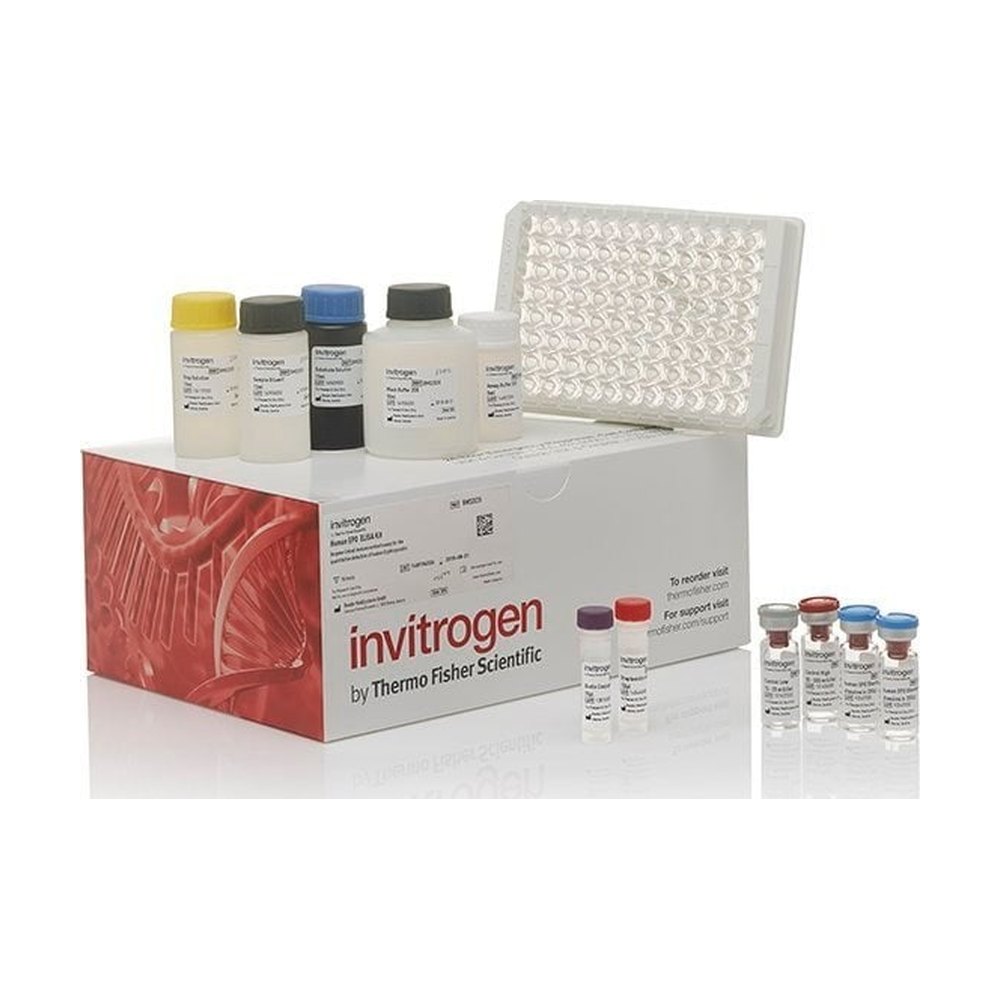
Ref.: BL-RE-091071Manufacturer ref.: ERIGF1X5 5 x 96 tests
€2,955.00 excl. VAT
Kit ELISA sandwich Insulin-Like Growth Factor 1 (Rt IGF-1) (rat): quantitative assay of Rt IGF-1 in serum, plasma or cell culture medium. The test exclusively recognizes the natural and recombinant forms of Rt IGF-1.
Accession number
P08025
Dose range
30.72 pg/ml to 7.500 pg/ml
Sensitivity of the dosage
30 pg/ml
Calibration range
30 pg/ml to 7.500 pg/ml
Dose
ELISA solid-phase sandwich
Brand
Invitrogen
Kit ELISA sandwich Insulin-Like Growth Factor 1 (Rt IGF-1) (rat): quantitative assay of Rt IGF-1 in serum, plasma or cell culture medium. The test exclusively recognizes the natural and recombinant forms of Rt IGF-1.
Kit ELISA sandwich Insulin-Like Growth Factor 1 (Rt IGF-1) (rat): quantitative assay of Rt IGF-1 in serum, plasma or cell culture medium. The test exclusively recognizes the natural and recombinant forms of Rt IGF-1.
Method principle: This ELISA solid phase sandwich test (immuno-enzymatic dose) measures the amount of target bound between a pair of matched antibodies. A specific target antibody is pre-adsorbed into the wells of the supplied microplate. Samples, standards or controls are added to these wells and bind to immobilized antibodies (capture antibodies). The sandwich is formed by adding the second antibody (detection antibody), then a substrate solution reacts with the enzyme-antibodies-target complex to produce a measurable signal. The intensity of this signal is directly proportional to the concentration of the target present in the original sample.
Rigorous validation: Each batch manufactured from this ELISA kit is checked for criteria such as sensitivity, specificity, accuracy and reproducibility from one batch to another (see the package leaflet for more information on validation).
The effect of the growth factor 1 (insulin-like growth factor 1) is structurally and functionally similar to insulin, but its growth acceleration action is much higher. Various cellular responses are induced by the IGF1, including cell proliferation, differentiation, migration and survival. In addition, the IGF1 is a polypeptide growth factor that stimulates the proliferation of many types of cells in muscle, bone and cartilaginous tissues. The effect of the L-IGF1, which stimulates glucose transport in osteoblastic cells (PyMS) derived from rat d-os, is much lower than insulin, not only for glycogen and DNA synthesis, but also for strengthening glucose absorption. In circulation, IGF are primarily bound to binding proteins (IGFBP) that prolong the half-life of IGF and play a role in their distribution to target tissues. The IGF-I is known as one of the most powerful activators in the AKT signaling pathway, known as a proliferation stimulator and a programmed cell death inhibitor. In addition, mature human IGF-I is 100% homologous to bovine and porcine proteins. Low levels of d的IGF1 have been associated with Alzheimer's disease. The IGF1 is treated with a precursor, bound by a specific and secreted receptor. Deficiencies in the IGF1 gene are a cause of growth factor 1 deficiency similar to insulin and several transcription variants coding different isoforms have been discovered.
Sensitivity
Sensitivity of the dosage: 30 pg/ml.
Measurement range
Dose range: 30.72 pg/ml to 7.500 pg/ml.
Duration of dosing
Total dosage duration: 4 hours 45 min.
Specificity
This ELISA antibody detects rat IGF-I and mouse IGF-I Other undetermined species.