Fibronectin is a disulfide-bonded dimer with a molecular weight range of 230-250 kDa. In the extracellular matrix of several connective tissues and vessels, fibronectin is present as an insoluble protein that is extensively cross-linked by…
Fibronectin is a disulfide-bonded dimer with a molecular weight range of 230-250 kDa. In the extracellular matrix of several connective tissues and vessels, fibronectin is present as an insoluble protein that is extensively cross-linked by interchain disulfide bonds forming high molecular mass polymers. Fibronectin is most abundant during embryonic development and tissue remodeling. Fibronectin is also present at high concentrations as a soluble plasma protein. Fibronectin is organized as a linear series of repeating modules which form domains for interaction with fibronectin itself, other matrix components (e.g. collagen and heparin) and receptors on cells (e.g. integrins). Fibronectin is present in a soluble dimeric form in plasma, and in a dimeric or multimeric form at the cell surface and in extracellular matrix. Fibronectin is involved in cell adhesion and migration processes including embryogenesis, wound healing, blood coagulation, host defense, and metastasis. Fibronectin has been implicated in carcinoma development in lung cancer. Further, Fibronectin expression is increased especially in non-small cell lung carcinoma. The adhesion of lung carcinoma cells to Fibronectin enhances tumorgenecity and confers resistance to apoptosis induced by standard chemotherapeutic agents. The gene encoding Fibronectin has three regions subject to alternative splicing, with the potential to produce 20 different transcript variants. However, the full-length nature of some Fibronectin variants has not been determined.
Sensitivity
Sensitivity of dosage: 0.94 ng/mL.
Measurement range
Dose range: 1.56 to 100 ng/mL.
Duration of dosing
Total duration of dosing: 3 h 30 min.
Samples
Type of sample: Plasma (volume 100 µL).
Conjugate
Conjugated: HRP.
Technical specifications
| General |
|---|
| Brand | Invitrogen |
|---|
| Supplier ref. (Fisher Scientific) | 18087414 |
|---|
| Specifications |
|---|
| Accession number | P11276 |
|---|
| Dose range | 1.56 to 100 ng/mL |
|---|
| Sensitivity of the dosage | 0.94 ng/mL |
|---|
| Conjugate | HRP |
|---|
| Product type | ELISA |
|---|
| Type of sample | Plasma |
|---|
| For use with (equipment) | Colorimetric Microplate Reader |
|---|
| Genetic identification (Enter) | 14268 |
|---|
| Gene symbol(s) | FN1 |
|---|
| Coefficient of inter-dose variation | <10% |
|---|
| Coefficient of intra-dose variation | <10% |
|---|
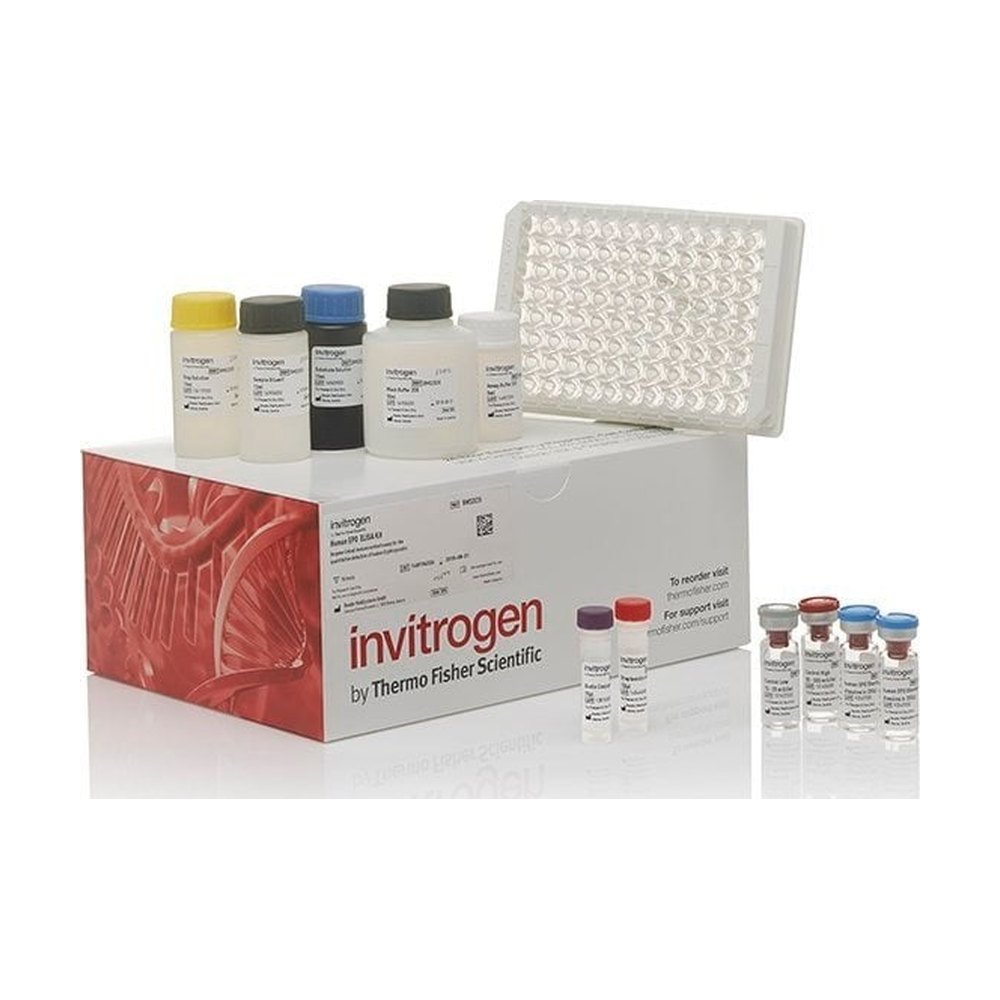
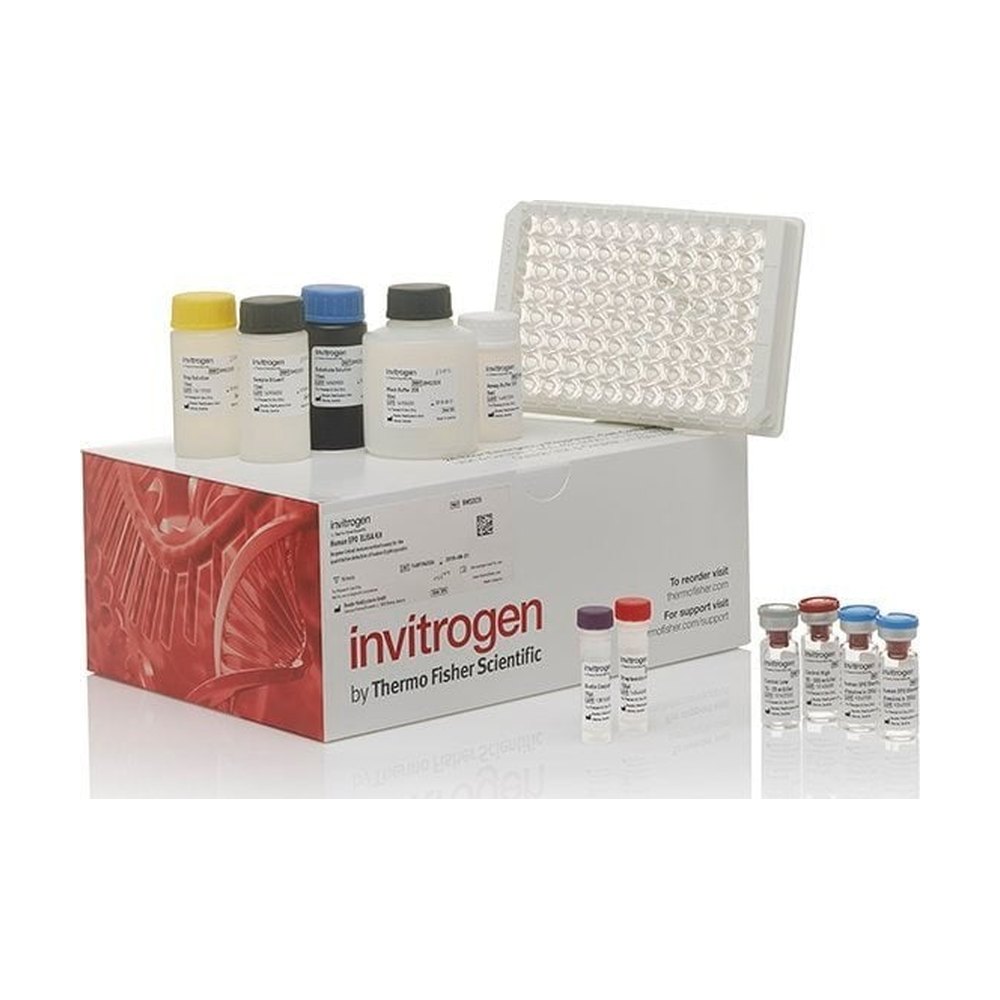
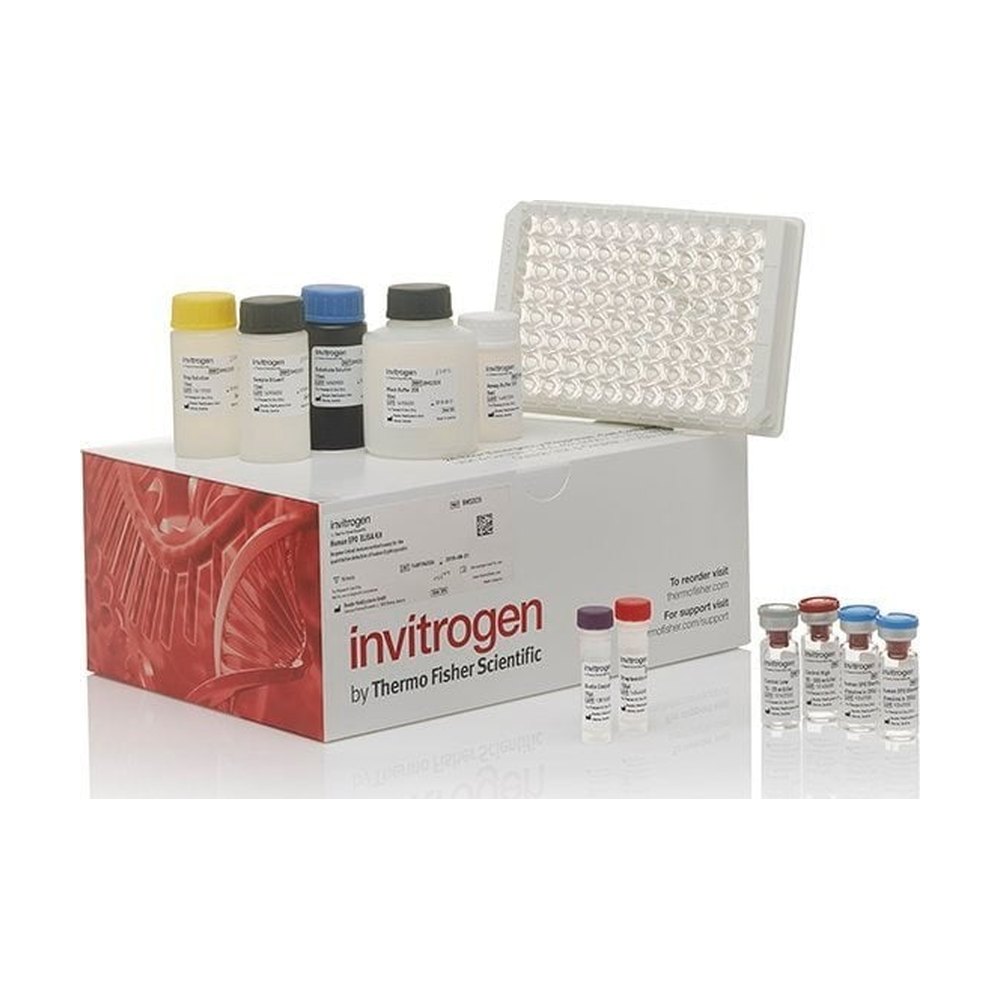
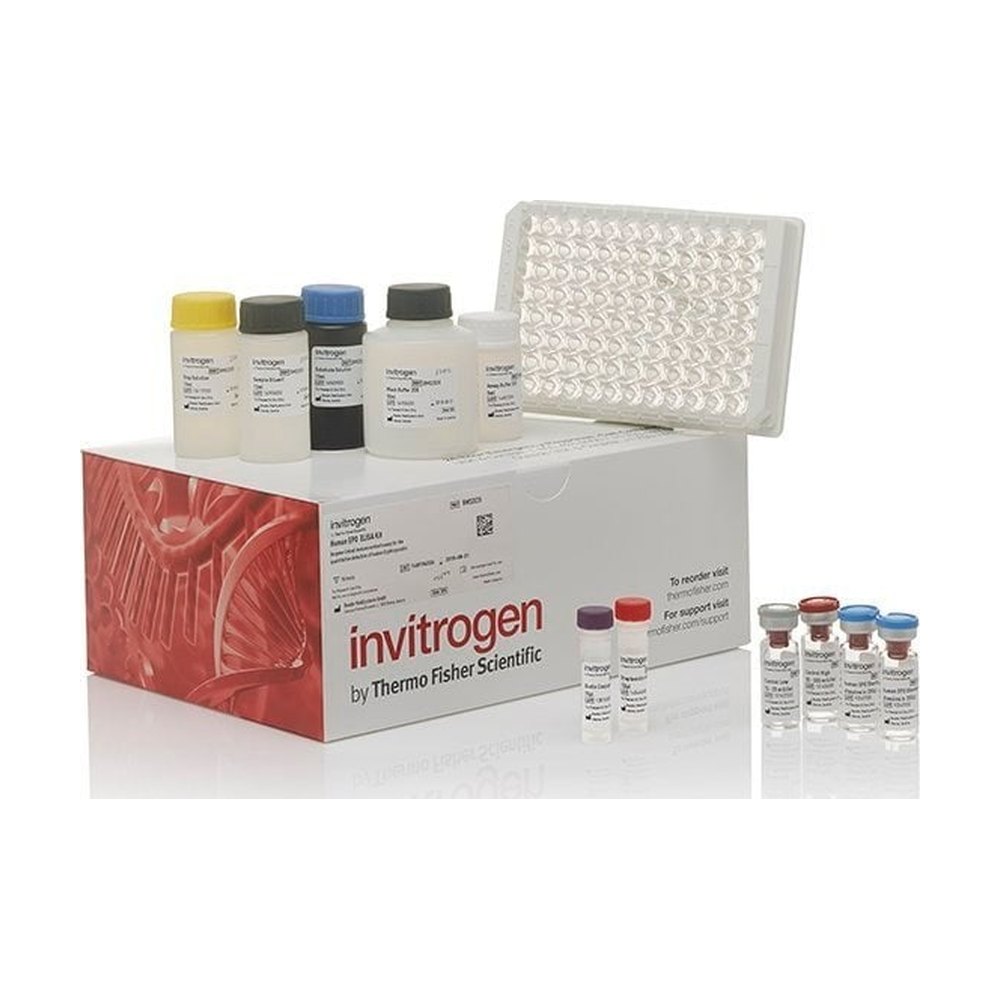
| Contents of kits | Pre-coated 96 well flat, Standard, Biotinylated Detection Antibody, HRP Conjugate, Standard & Sample Dilute, Biotinylated Detection Antibody Dilute, HRP Conjugate Dilute, Wash Buffer, TMB Substrate, Stop Solution, Plate Sealer |
|---|
| Marker or dye | HRP |
|---|
| Quantity | 96 Tests |
|---|
| Regulatory status | RUO |
|---|
| Target | Mouse |
|---|
| Test time | 1 hr 20 min |
|---|
| Physical characteristics |
|---|
| Volume of sample | 100 µL |
|---|
| Storage and shipping |
|---|
| Storage conditions | Refer to product documentation for component specific storage temperature. |
|---|
| Total duration of dosing | 3 hr 30 min |
|---|
Origin and customs
| Manufacturer ref. | EEL096 |
|---|
| Country of origin | China |
|---|
| HS customs code | 3822 11 00 00 |
|---|
A question or a specific configuration?
Contact us for a quote.