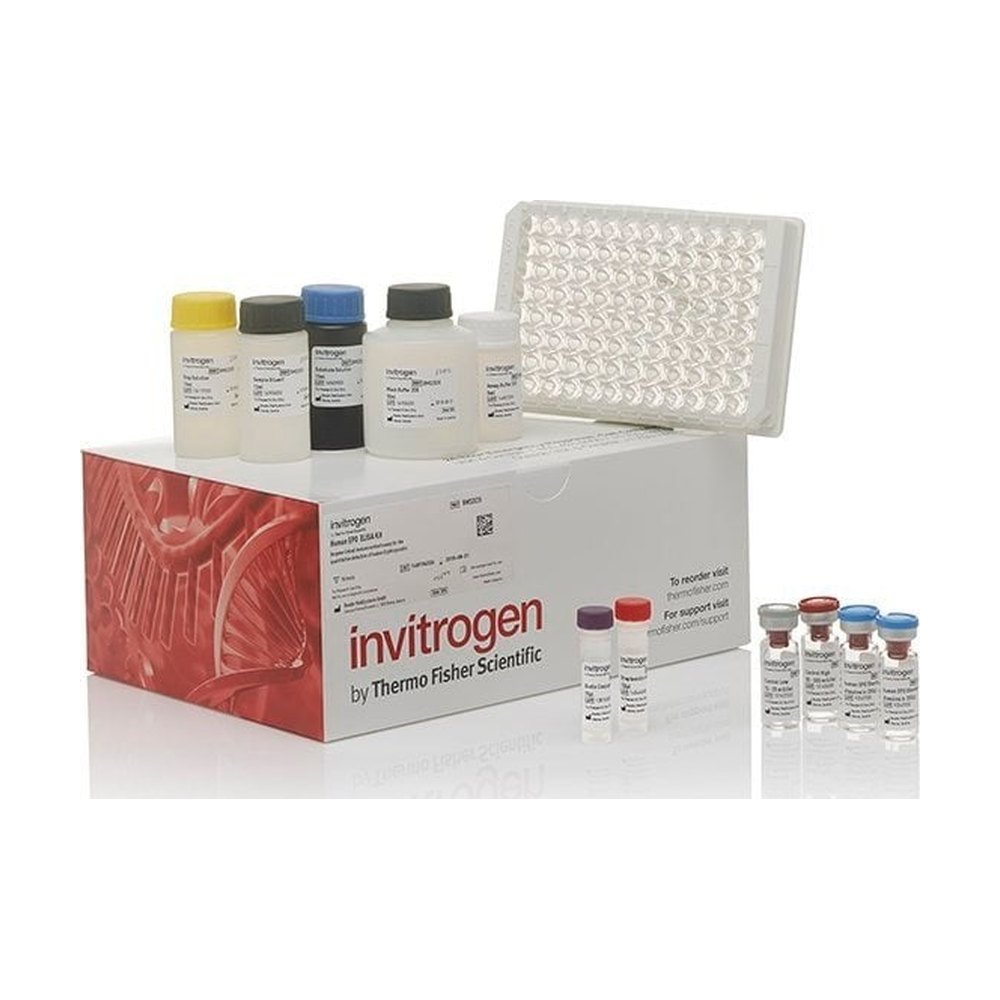
Rat p53 quantitates rat p53 in serum, plasma, supernatant. The assay will exclusively recognize both natural and recombinant rat p53.
Rat p53 quantitates rat p53 in serum, plasma, supernatant. The assay will exclusively recognize both natural and recombinant rat p53.
The tumour suppressant protein, p53, is a sequence-specific transcription factor that is activated by cell stress. P53 allows to mediate cell cycle arrest or apoptosis in response to damage to the DNA or to the deprivation of pyrimidine nucleotides. P53 is regulated in response to stress signals and stimulated to activate transcription of specific genes, resulting in the expression of p21waf1 and other proteins involved in G1 or G2/M shutdown. The p53 structure includes a N-terminal end transactivation domain, a central DNA binding domain, a domain of oligomerization and a regulatory domain of the C-terminal end. There are various p53 phosphorylation sites, including Ser15 phosphorylation, which is important for p53 activation and stabilization. P53 was characterized as a factor in blocking the proliferative action of damaged cells and acting as an anticancer agent. The phosphorylation of Ser392 in p53 has been shown to be related to the formation of human tumours. In addition, it was shown that p53 protein was related to the effects of aging and oxidative stress and that an increase of p53 was related to long-term potentiation deficits (PLT) in learning and memory. P53 is found in very small amounts in normal cells, however, in a variety of transformed cell lines, it is expressed in high quantities and appears to contribute to transformation and malignancy. P53 mutants that occur frequently in a number of human cancers do not bind the consensus sequence binding site of the DNA and cause loss of tumour suppressant activity. Alterations of the TP53 gene occur not only in the form of somatic mutations in human malignancies, but also in the form of germ mutations in certain cancer-prone families such as Li-Fraumeni syndrome.
Sensitivity
Sensitivity of the dosage: 0.32 ng/ml.
Measurement range
Dose range: 0.328 to 80 ng/ml.
Duration of dosing
Total duration of dosing: 4 h 45 min.
Samples
Type of sample: Plasma, Serum, Surnatant (surnatant volume, 50 µl; plasma, 50 µl; serum, 50 µl).
Technical specifications
| General |
|---|
| Brand | Invitrogen |
|---|
| Supplier ref. (Fisher Scientific) | 17135063 |
|---|
| Specifications |
|---|
| Accession number | Antigen NY-CO-13; bbl; BCC7; BFY; bhy; Cellular tumour antigen p53; Cys 51 Stop; EGK_08142; FLJ92943; HGNC11998; I79_002739; LFS1; Li-Fraumeni syndrome; mutant p53; mutant tumour protein 53; OTTMUSP00000006194; p44; P53; cell tumour antigen p53; tumour suppressor p53; ph |
|---|
| Dose range | 0.328 to 80 ng/ml |
|---|
| Sensitivity of the dosage | 0.32 ng/ml |
|---|
| Conjugate | Biotin |
|---|
| Product type | ELISA |
|---|
| Type of sample | Plasma, Serum, Surnatant |
|---|
| For use with (equipment) | Colorimetric microplate reader |
|---|
| Genetic identification (Enter) | P10361 |
|---|
| Gene symbol(s) | Tp53 |
|---|
| Coefficient of inter-dose variation | <12% |
|---|
| Coefficient of intra-dose variation | <10% |
|---|
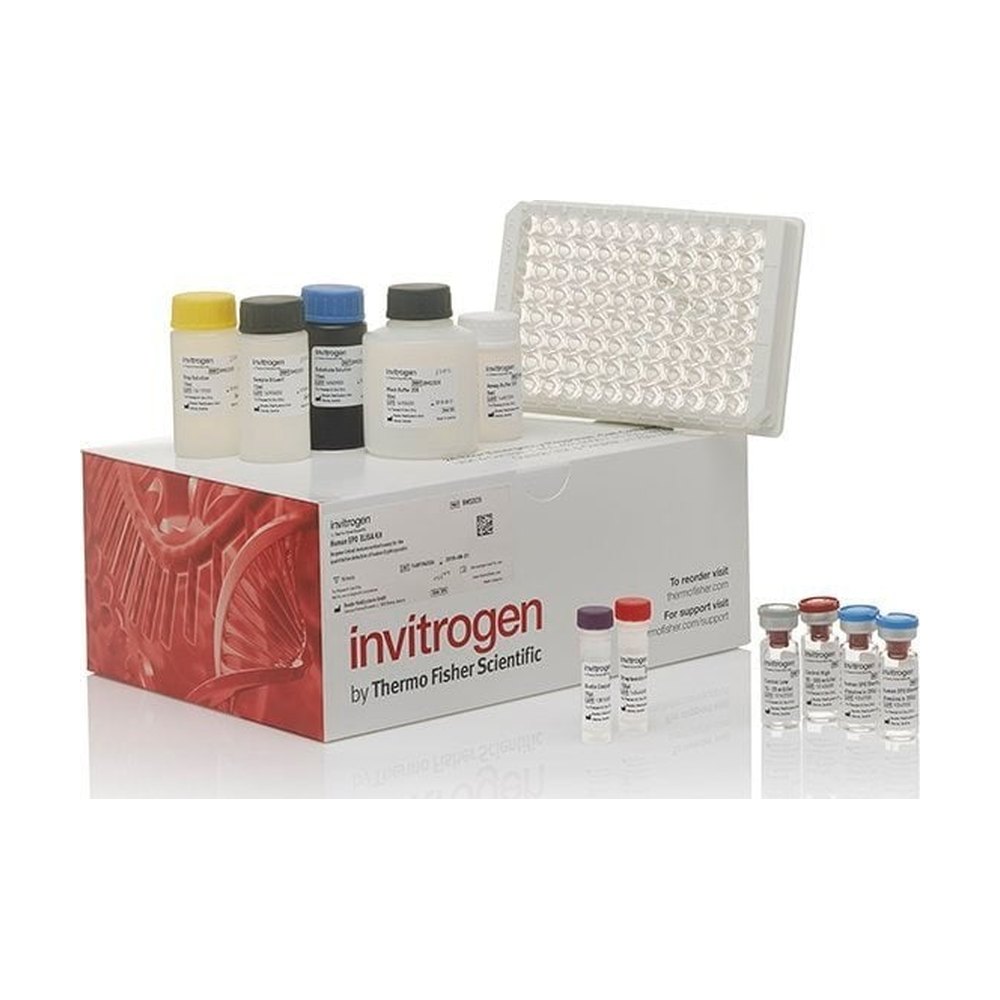
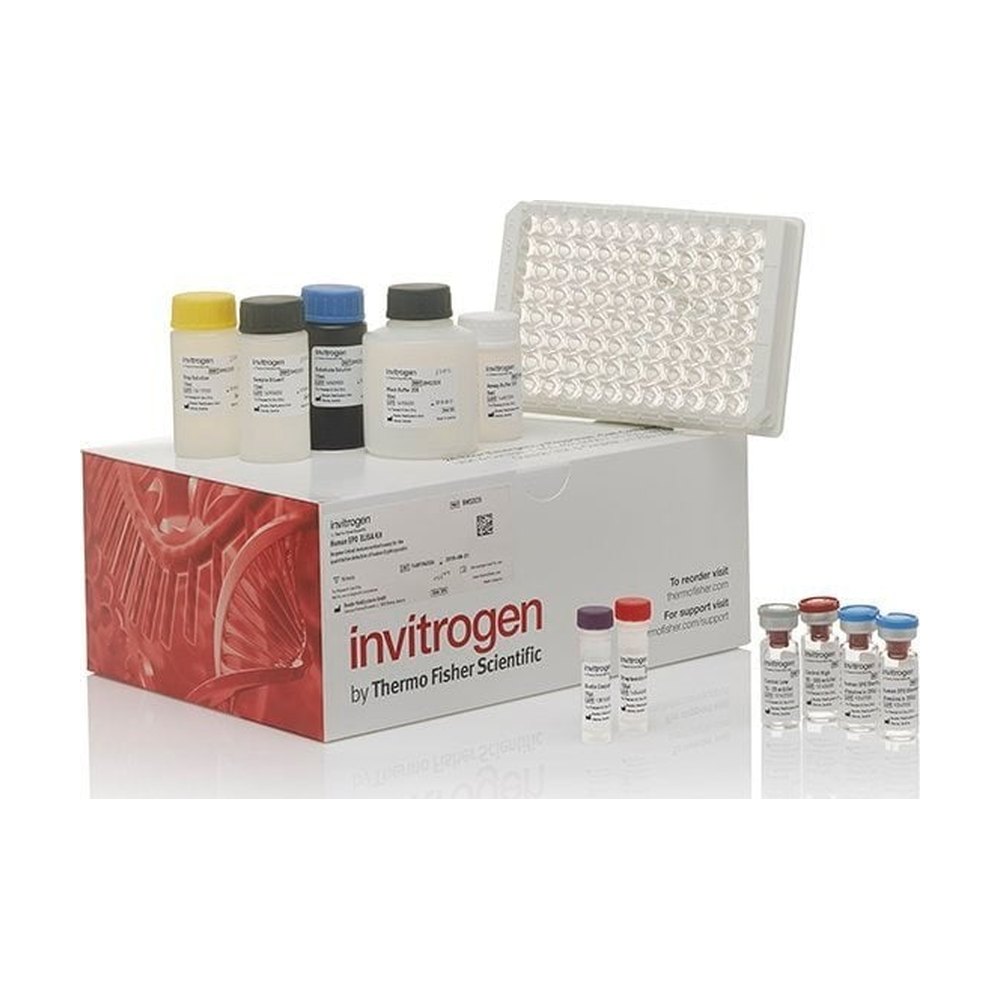
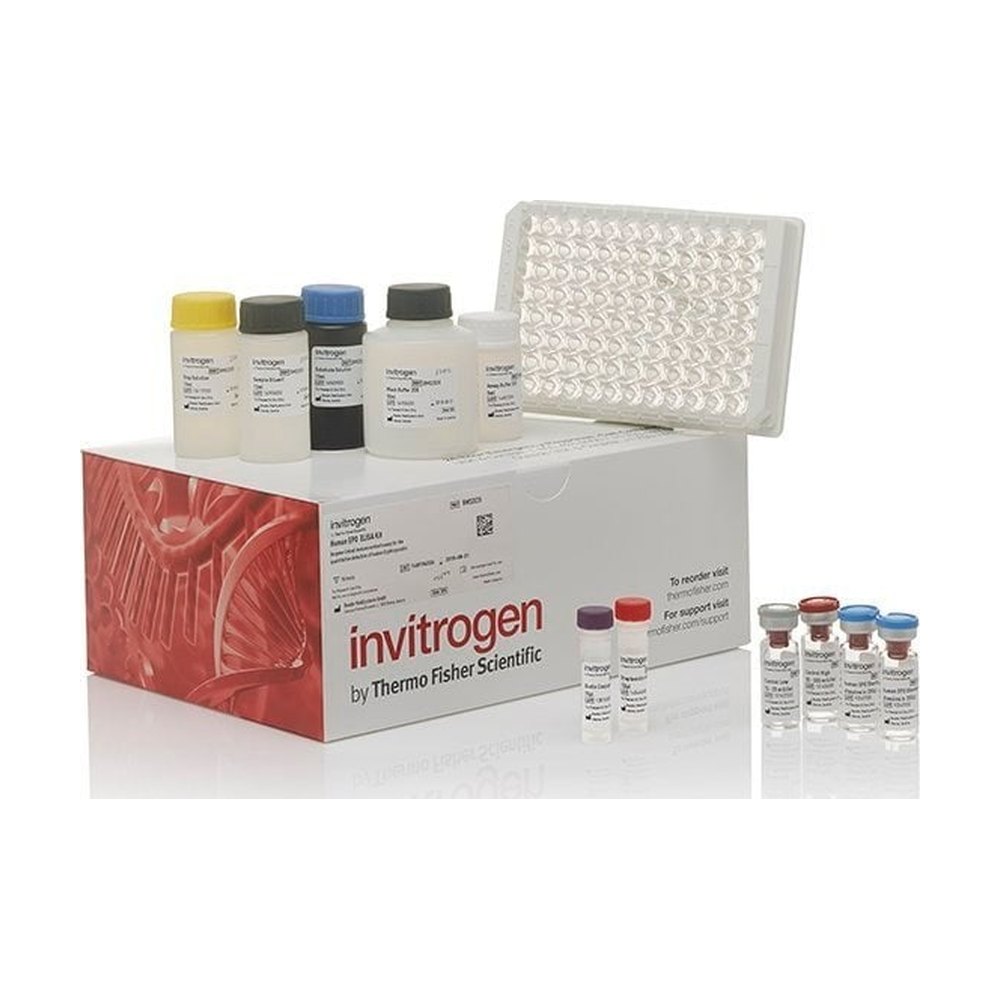
| Contents of kits | 96 pre-coated well plate, standard, dosing diluent concentrate, biotinylated detection antibody, SAV-HRP, washing pad, chromogen, stop solution, adhesive plate lids |
|---|
| Marker or dye | HRP |
|---|
| Quantity | 96 tests |
|---|
| Regulatory status | Use exclusively for research |
|---|
| Target | p53 |
|---|
| Test time | 1 h 20 min |
|---|
| Physical characteristics |
|---|
| Volume of sample | Supernatant, 50 µl; plasma, 50 µl; serum, 50 µl |
|---|
| Storage and shipping |
|---|
| Storage conditions | 2°C to 8°C |
|---|
| Total duration of dosing | 4 h 45 min |
|---|
Origin and customs
| Manufacturer ref. | ERA47RB |
|---|
| Country of origin | United States |
|---|
| HS customs code | 3002 12 00 00 |
|---|
A question or a specific configuration?
Contact us for a quote.