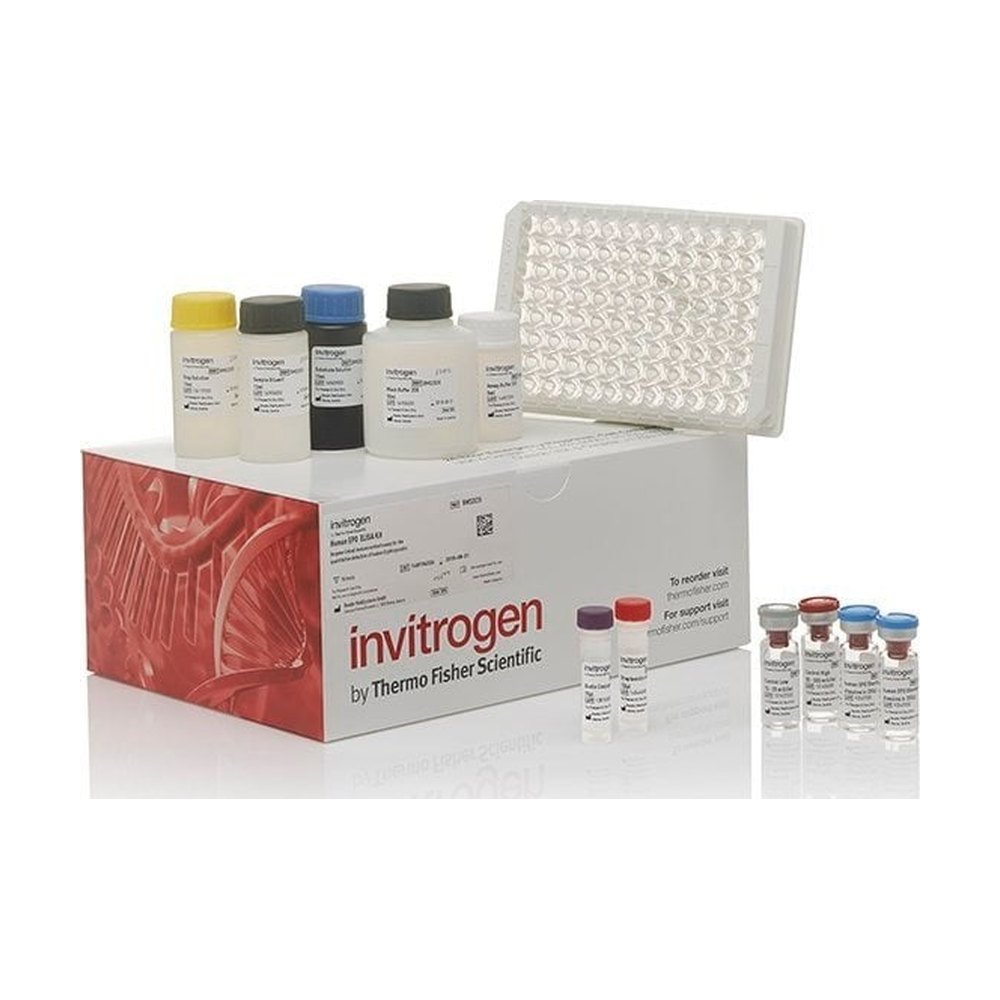
Kit ELISA LOX-1 sandwich (OLR) (human): quantitative determination of Hu LOX-1 in serum, plasma or cell culture medium. The test recognizes only the natural and recombinant forms of Hu LOX-1.
Accession number
P78380
Dose range
2.05-500 pg/ml
Sensitivity of the dosage
2 pg/ml
Calibration range
2 pg/ml to 500 pg/ml
Dose
ELISA solid-phase sandwich
Brand
Invitrogen
Kit ELISA LOX-1 sandwich (OLR) (human): quantitative determination of Hu LOX-1 in serum, plasma or cell culture medium. The test recognizes only the natural and recombinant forms of Hu LOX-1.
Kit ELISA LOX-1 sandwich (OLR) (human): quantitative determination of Hu LOX-1 in serum, plasma or cell culture medium. The test recognizes only the natural and recombinant forms of Hu LOX-1.
Method principle: This ELISA solid phase sandwich test (immuno-enzymatic dose) measures the amount of target bound between a pair of matched antibodies. A specific target antibody is pre-adsorbed into the wells of the supplied microplate. Samples, standards or controls are added to these wells and bind to immobilized antibodies (capture antibodies). The sandwich is formed by adding the second antibody (detection antibody), then a substrate solution reacts with the enzyme-antibodies-target complex to produce a measurable signal. The intensity of this signal is directly proportional to the concentration of the target present in the original sample.
Rigorous validation: Each batch manufactured from this ELISA kit is checked for criteria such as sensitivity, specificity, accuracy and reproducibility from one batch to another (see the package leaflet for more information on validation).
This gene codes a low density lipoprotein receptor that belongs to the type C lectin superfamily. This gene is regulated by the signaling pathway of cyclic AMP. The coded protein binds, internalizes and degrades low-density oxidized lipoproteins. This protein may be involved in Fas-induced regulation of apoptosis. This protein can play a role as a garbage receiver. Mutations of this gene have been associated with atherosclerosis, the risk of myocardial infarction, and may alter the risk of Alzheimer's disease. Alternative splicing generates several transcription variants.