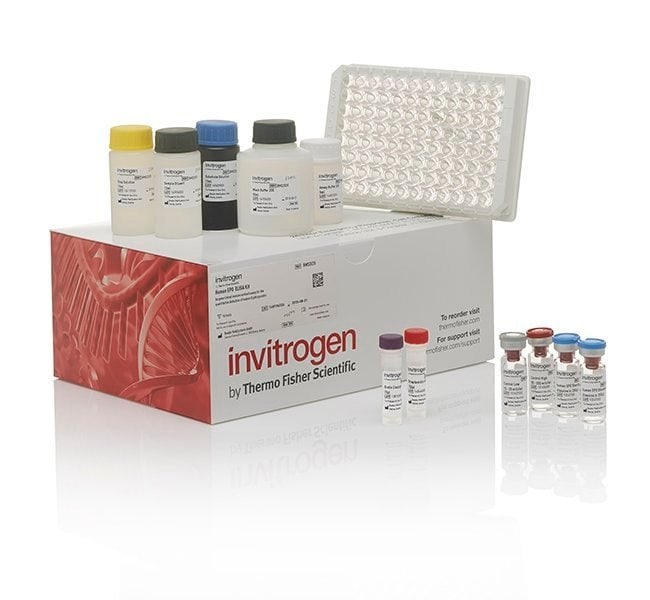
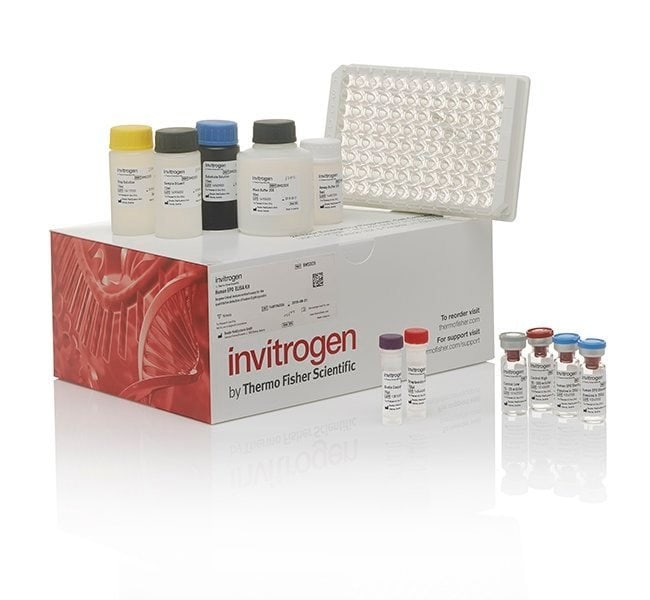
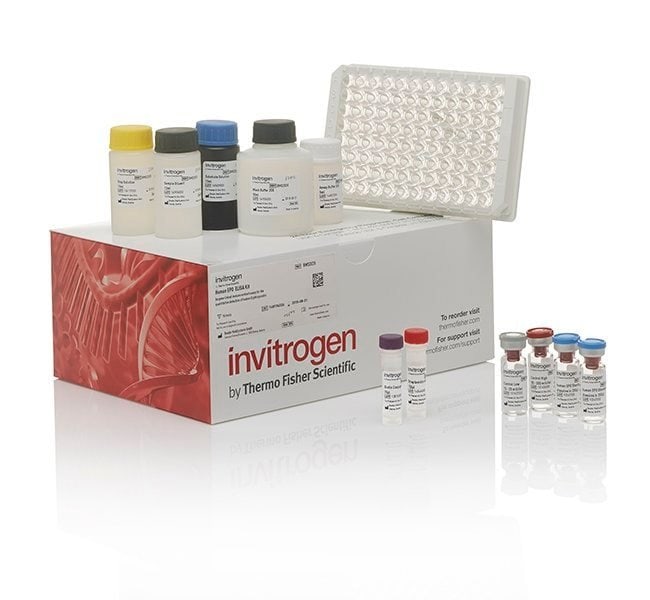
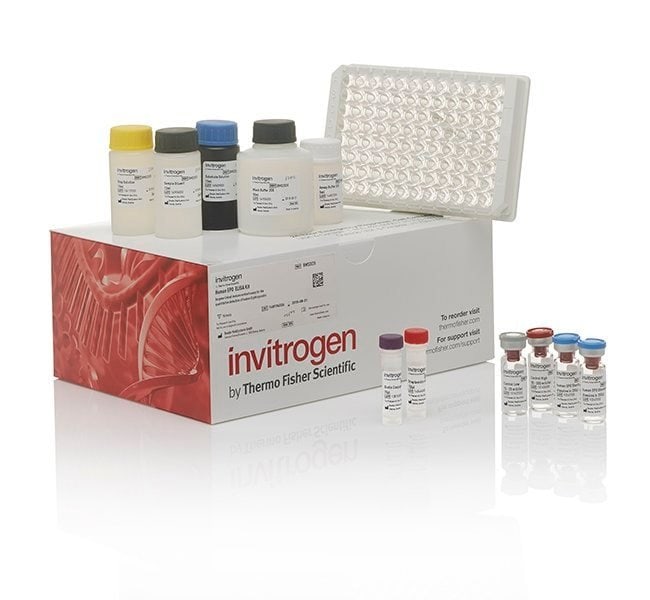
M-CSF (Macrophage colony-stimulating factor, CSF-1) is a survival factor essential for the proliferation and development of monocytes, macrophages, and osteoclast progenitor cells. M-CSF also induces VEGF (vascular endothelial growth factor) secretion by macrophages, thereby mediating mobilization of endothelial progenitor cells and neovascularization. M-CSF is present as several bioactive isoforms that differ in potency and stability. The full-length protein is synthesized as a membrane-spanning protein that can be expressed on the cell surface or further cleaved and modified in the secretory vesicle. Further, M-CSF is a disulfide-bonded homodimer which is processed into one of two isoforms, a glycoprotein or a proteoglycan that has been modified by the addition of chondroitin sulfate to each subunit. Binding of M-CSF to its receptor, c-Fms (CSF-1R or CD115) induces dimerization of the receptor followed by internalization and degradation of the complex. Functionally, M-CSF is known to stimulate differentiation of hematopoietic stem cells to monocyte-macrophage cell populations in culture. M-CSF acts through the CSF receptor 1. Although human M-CSF shows activity on mouse cells, mouse CSF shows no activity on human cells.
Caractéristiques techniques
| Marque | Invitrogen |
|---|
| Réf. B-LABO | BL-RE-143698 |
|---|
| Réf. fabricant | 17889115 |
|---|
| Numéro d’adhésion | P07141 |
|---|
| Type de produit | ELISA |
|---|
| Identification génétique (Entrez) | 12977 |
|---|
| Symbole de gène(s) | Csf1 |
|---|
| Quantité | 10 x 96 Tests |
|---|
| État réglementaire | RUO |
|---|
| Conditions de stockage | Refer to product documentation for component specific storage temperature. |
|---|
| Cible | Mouse |
|---|
Une question, une configuration particulière ?
Contactez-nous pour un devis.