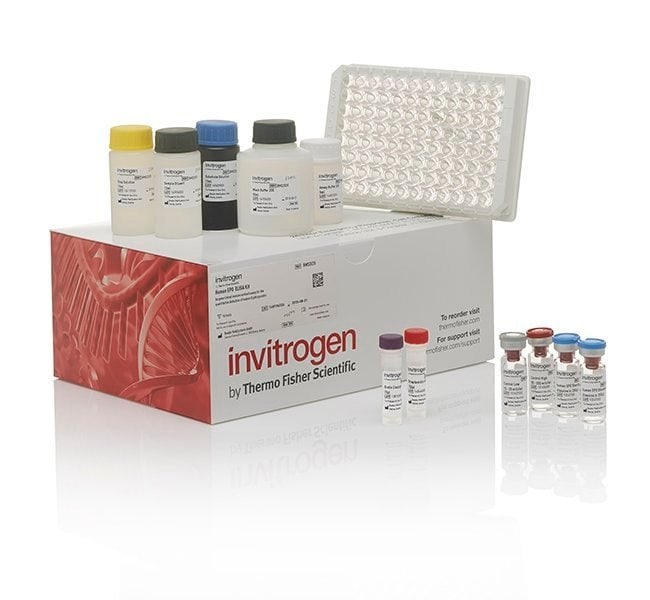
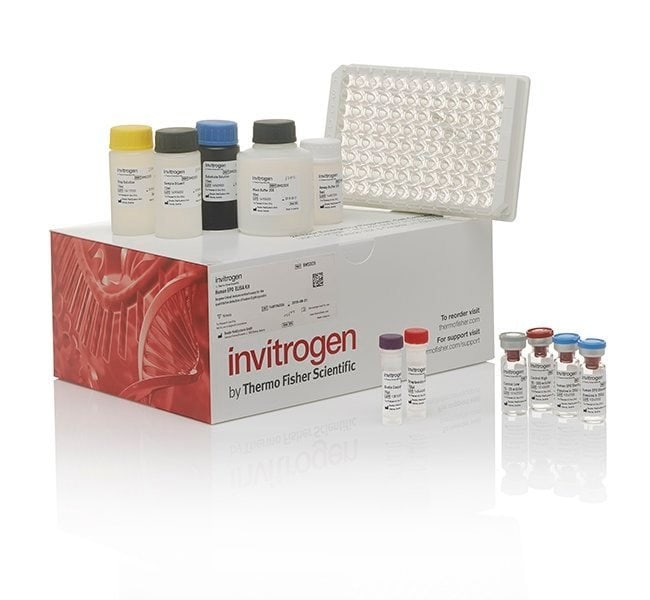
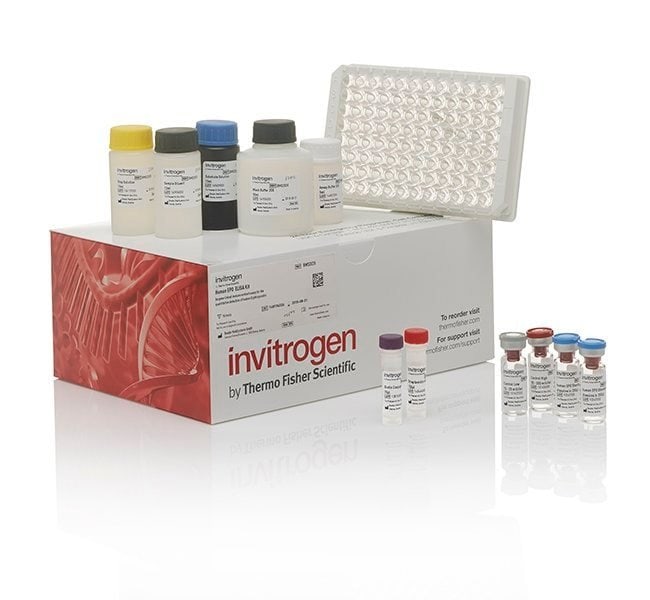
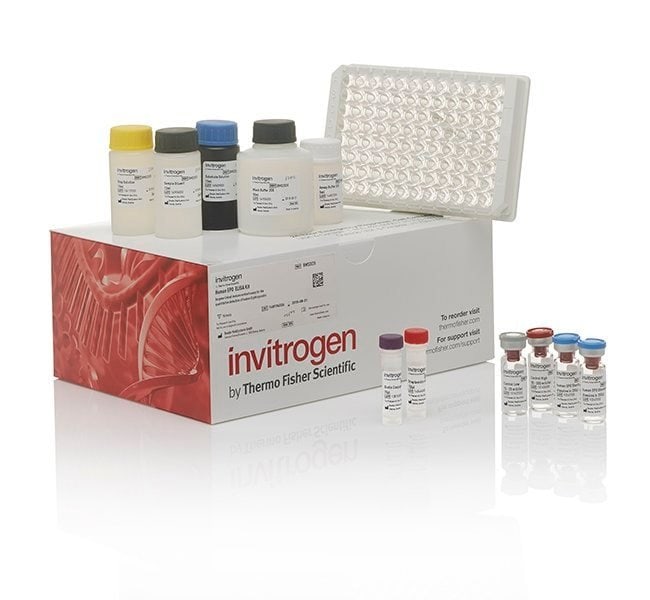
The DNA Damage ELISA quantitates PGFM in serum, plasma, saliva, urine, digested DNA, fecal extracts, or cell culture medium. The assay will exclusively recognize both natural and recombinant DNA Damage. Principle of the method The PGFM solid-phase sandwich ELISA (enzyme-linked immunosorbent assay) is designed to measure the amount of the target bound between a matched antibody pair. A target-specific antibody has been pre-coated in the wells of the supplied microplate. Samples, standards, or controls are then added into these wells and bind to the immobilized (capture) antibody. The sandwich is formed by the addition of the second (detector) antibody, binding to the target on a different epitope from the capture antibody. A conjugated enzyme has been incorporated into the assay. After incubation and washing steps to rid the microplate of unbound substances, a substrate solution is added that reacts with the enzyme-antibody-target complex to produce measurable signal. The intensity of this signal is inversely proportional to the concentration of target present in the original specimen. Rigorous validation Each manufactured lot of this ELISA kit is quality tested for criteria such as sensitivity, specificity, precision, and lot-to-lot consistency. See manual for more information on validation.
Free radicals and other reactive species are constantly generated in vivo and cause oxidative damage to biomolecules, a process held in check only by the existence of multiple antioxidant and repair systems as well as the replacement of damaged nucleic acids, proteins, and lipids. Intracellular free radical species (ROS) are produced as a result of normal metabolism and extracellular forms are produced as a result of ultraviolet radiation or ionizing radiation. Cellular function may be interrupted or stopped if DNA damage corrupts the integrity of essential information contained in the genome. When individual bases are damaged, nonspecific DNA repair enzymes excise DNA lesions to release deoxynucleotides, and base specific repair glycosylases excise the corresponding base. Deoxynucleotides are enzymatically hydrolyzed to stable deoxynucleosides, and these repair products are transported through the blood and excreted in the urine. Damage to RNA is reflected in nucleoside adducts. Among numerous types of oxidative DNA damage, the formation of 8-hydroxy-2’-deoxyguanosine (8-OHdG) is a ubiquitous marker of oxidative stress. 8-OHdG is physiologically formed and enhanced by chemical carcinogens. During the repair of damaged DNA in vivo by exonucleases, the resulting 8-OHdG is excreted without further metabolism into urine. 8-Hydroxy-2’-deoxyguanosine (8-OHdG) is identical across all species.
Caractéristiques techniques
| Marque | Invitrogen |
|---|
| Réf. B-LABO | BL-RE-106645 |
|---|
| Réf. fabricant | 17865177 |
|---|
| Plage de dosage | 62,6-8000 pg/ml |
|---|
| Sensibilité du dosage | 50,9 pg/ml |
|---|
| Doser | Dosage multiplex sur la plateforme Luminex |
|---|
| Conjugué | HRP |
|---|
| Méthode de détection | Fluorescent |
|---|
| Type de produit | Kit ELISA |
|---|
| Type d’échantillon | ADN digéré, Extrait fécal, Salive, Sérum, Surnageant, Surnageant, Urine |
|---|
| Suffisant pour | 10 x 96 dosages |
|---|
| Espèces cibles | Humaine |
|---|
| À utiliser avec (application) | ELISA, dosages de protéines, tests d’activité, biologie des protéines, biologie de la reproduction, inflammation, stress oxydatif, métabolisme, signalisation cellulaire, épigénétique, hématologie, dommages à l’ADN, biologie du cancer, immunologie, neurosciences, neurobiologie, détection d’hormones stéroïdes |
|---|
| À utiliser avec (équipement) | Lecteur de microplaques colorimétriques |
|---|
| Coefficient de variation inter-dosage | 9,9% |
|---|
| Coefficient de variation intra-dosage | 9% |
|---|
| Contenus des kits | Plaque à 96 puits pré-enduite, Étalon, Concentrat de diluant de dosage, Anticorps de détection conjugué au HRP, Tampon de lavage, Chromogène, Solution d’arrêt, Couvercles de plaques adhésives |
|---|
| Marqueur ou colorant | HRP |
|---|
| État réglementaire | RUO |
|---|
| Disciplines de recherche | Inflammation |
|---|
| Volume d’échantillon | ADN digéré, 50 μl ; extrait fécal, 50 μl ; plasma, 6,25 μl ; salive, 25 μl ; sérum, 6,25 μl ; surnageant, 50 μl ; urine, 12,5 μl |
|---|
| Conditions de stockage | -20°C |
|---|
| Cible | Produits chimiques |
|---|
| Heure du test | 1 h 20 min |
|---|
| Durée totale du dosage | 2 h 30 min |
|---|
Une question, une configuration particulière ?
Contactez-nous pour un devis.