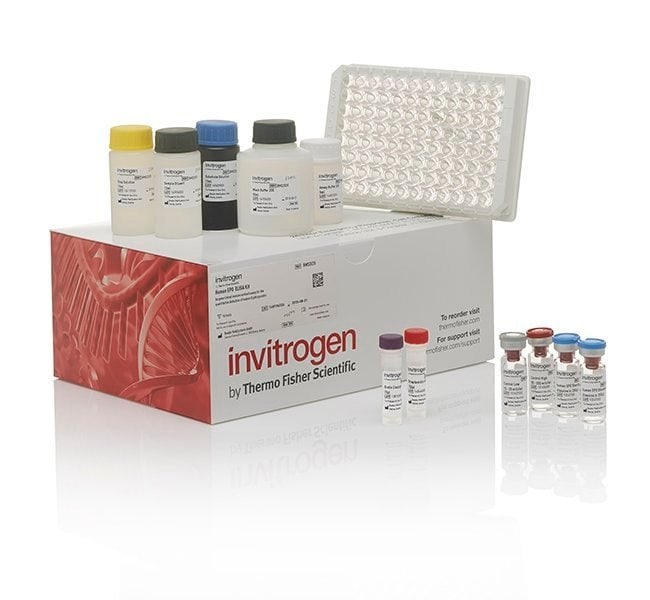
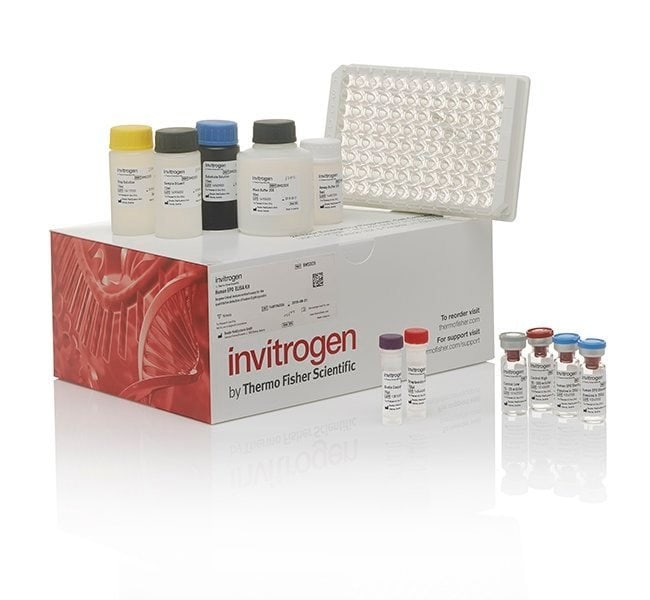
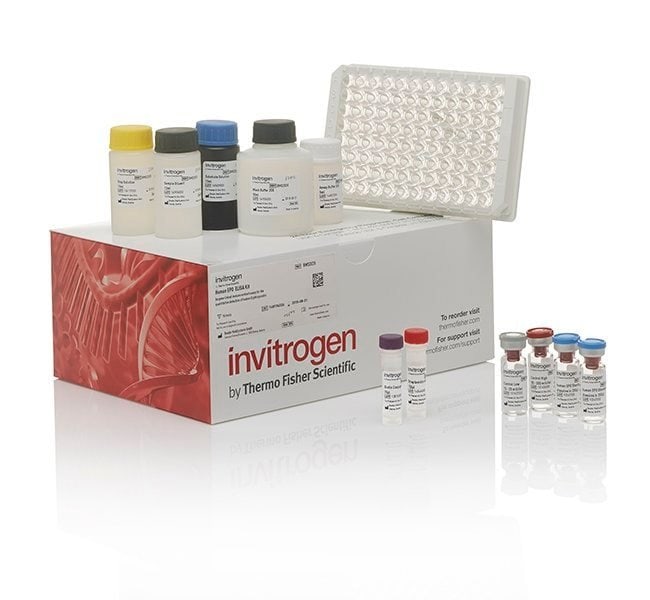
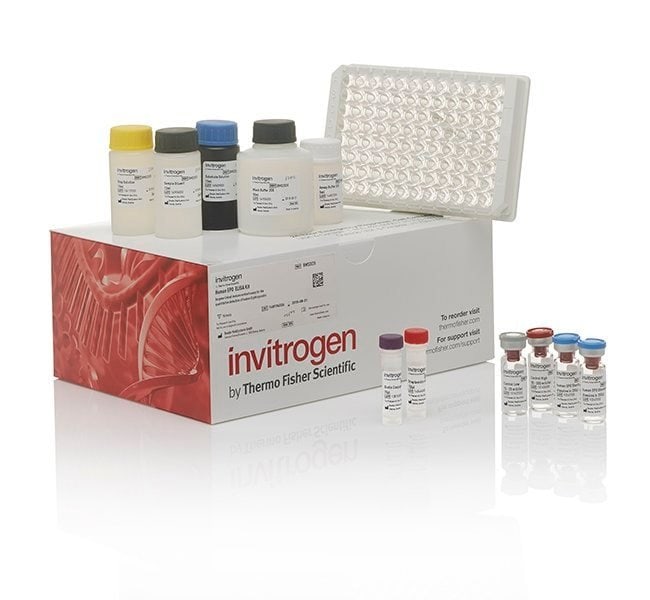
The Human Caspase 3 (Cleaved) ELISA Kit is designed to detect and quantify the level of Caspase 3 (Cleaved) in fresh or frozen human cell lysates. The assay recognizes both natural and recombinant Caspase 3 (Cleaved). Principle of the method A monoclonal capture antibody specific for Caspase 3 (Cleaved) has been coated onto the wells of the 96-well plate. During the first incubation, standards of known content and unknown samples are pipetted into the wells and the antigen binds to the immobilized (capture) antibody. After washing, a rabbit antibody specific for the target protein is added to the wells and serves as a detection antibody by binding to the immobilized protein captured during the first incubation. After washing, a horseradish peroxidase labeled anti-rabbit IgG is added. This binds to the detection antibody to complete the four member sandwich. After a third incubation and washing to remove all the unbound enzyme, a substrate solution (TMB) is added, which is acted upon by the bound enzyme to produce color. The intensity of this colored product is directly proportional to the concentration of target protein present in the original specimen and the optical density can be read on a standard microplate reader. Rigorous validation Each manufactured lot of this ELISA kit is quality tested for criteria such as sensitivity, specificity, precision, and lot-to-lot consistency. See manual for more information on validation.
Ce gène code une protéine qui fait partie de la famille des protéases à acide aspartique et cystéine (caspases). L’activation séquentielle des caspases joue un rôle central dans la phase d’exécution de l’apoptose cellulaire. Les caspases existent en tant que proenzymes inactives qui subissent un traitement protéolytique à des résidus aspartiques conservés pour produire deux sous-unités, grandes et petites, qui se divisent pour former l’enzyme active. Cette protéine clive et active les caspases 6,7 et 9, et la protéine elle-même est traitée par les caspases 8,9 et 10. C’est la caspase prédominante impliquée dans le clivage de la protéine précurseur amyloïde-bêta 4A, qui est associée à la mort neuronale dans la maladie d′Alzheimer. L’épissage alternatif de ce gène résulte en deux variantes de transcription qui codent la même protéine.
Points forts
Informations sur la commande
Conditions d’expédition : Glace humide
Caractéristiques techniques
| Marque | Invitrogen |
|---|
| Réf. B-LABO | BL-RE-090569 |
|---|
| Réf. fabricant | 10432375 |
|---|
| Numéro d’adhésion | P42574 |
|---|
| Plage de dosage | 0,039-2,5 ng/ml |
|---|
| Sensibilité du dosage | 0,033 ng |
|---|
| Concentration | 0,039 à 2,5 ng/ml |
|---|
| Conjugué | Biotine |
|---|
| Type de produit | Kit ELISA |
|---|
| Type d’échantillon | Lysats cellulaires |
|---|
| Espèces cibles | Humaine |
|---|
| À utiliser avec (équipement) | Lecteur de microplaques colorimétriques |
|---|
| Identification génétique (Entrez) | 836 |
|---|
| Symbole de gène(s) | CPP32,CPP32B,SCA-1 |
|---|
| Temps d’incubation | 4 h |
|---|
| Coefficient de variation inter-dosage | 7,4% |
|---|
| Coefficient de variation intra-dosage | 4,2% |
|---|
| Contenus des kits | Plaque à 96 puits pré-enduite, Étalon, Tampon de dilution standard, Anticorps de détection biotinylé, Streptavidine HRP, Diluant HRP, Tampon de lavage, Chromogène, Solution d’arrêt, Couvercles de plaques adhésives |
|---|
| Marqueur ou colorant | HRP |
|---|
| Marqueur génétique | Caspase-3 |
|---|
| Quantité | 96 tests |
|---|
| État réglementaire | RUO |
|---|
| Volume d’échantillon | Lysat cellulaire ,10 μl |
|---|
| Conditions de stockage | 2°C à 8°C |
|---|
| Cible | Humaine |
|---|
| Heure du test | 1 h 20 min |
|---|
| Durée totale du dosage | 4 h |
|---|
Une question, une configuration particulière ?
Contactez-nous pour un devis.